Category: Blog

WHAT IS HVAC AND HOW IS IT DIFFERENT FROM AIR CONDITIONING?WHAT IS HVAC AND HOW IS IT DIFFERENT FROM AIR CONDITIONING?

There was a time when “HVAC” really was a term thrown about only by industry professionals and those wealthy enough to pay for it. Now, however, the entire industry has opened up. Google is littered with “what is HVAC” searches.

It’s become an almost generic term for air conditioning, used synonymously by people in all environments. But what does HVAC mean, exactly? How does it factor into your home or business, will it be heating or cooling? And what, if anything, is the difference between it and air conditioning?

These are the important questions, as we move into a world of better and better air control systems for spaces of all shapes and sizes. Because, ultimately, even with dozens of options to choose from, the only way to make a truly informed decision is to be, well, truly informed.

So join us, as we define HVAC, define air conditioning, and break down the differences between these two concepts.


WHAT IS HVAC?

Let’s start right off with an important question: “What does HVAC stand for?”. Short for heating, ventilation, and air conditioning, HVAC is responsible for heating and cooling a building. It’s also a source of proper ventilation, allowing for moisture to escape.

HVAC units can take on many shapes and sizes, all offering different benefits depending on their design and the spaces they’re being used in. Units may include any combination of the following:

  • Boilers
  • Air conditioning units
  • Ducts and moisture vents

Not all HVAC units are air conditioning units, even though AC units are included under the HVAC umbrella. As outlined above, what’s important to understand is that it’s actually a larger term. Think of it as an umbrella term that applies to all sorts of interrelated air control systems.


A CLOSER LOOK: HOW DOES YOUR HVAC WORK?

There are instances where the HVAC components may operate independently of each other. What’s more common, however, is for each component to work alongside the others. These so-called “combined systems” include both central heating and AC systems.

But make no mistake: your HVAC system is more than just a convenient way to warm up or cooling the space you live or work in. It’s a way to fully transform your indoor air quality and create a comfortable environment for everyone inside.

HVAC systems are available in several different variations. However, even with that said, at their core, they’re all based on the same essential build concepts. And it starts outside, not inside.

Fresh air is sourced and brought in from the outside environment by way of a process called “ventilation”. This can be carried out in one of two ways.


NATURAL VENTILATION

Ventilating your space naturally is done without specialized equipment, construction, or add-ons. We see this present in most homes, actually, in the form of any entry and exit points into the building. When the natural air outside moves through your windows, doors, and vents of its own accord, that’s natural ventilation.

Where is this most useful? Natural air exchanges like this are important in replenishing your oxygen levels, for starters. It’s also useful in removing odours and excess moisture from your home, as well as filtering out carbon dioxide.


MECHANICAL VENTILATION

Next, we have mechanical ventilation. This is a system that uses mechanical systems to transport air both into and out of the building. Old-fashioned architecture made it so most buildings had ready access to natural ventilation. Most homes, businesses, and official buildings made use of doors and windows to bring natural air from the outdoors, indoors.

Modern architecture is different, however. Contemporary builders opt for creating much more tightly-sealed homes, in general. This is a design philosophy that makes mechanical ventilation all the more important in households with HVAC systems.

Air enters the building using a specially designed air inlet unit, where it is immediately put to work. Air enters via the filter and is routed to different areas where it will be most needed. Specifically, it will be used in removing dust and dirt, allergens, and various other particles. This same air is used both in heating and cooling processes, and also works against excess humidity in the air.

Finally, once the air has been filtered and brought up or down to the appropriate temperature, it is headed home. In the case of a central system, this movement takes place via a network of ducts, allowing the air to travel wherever it is needed.


WHAT IS AIR CONDITIONING?

An air conditioner or AC system is specifically designed to cool or heat the air. In some circles, a contractor may call any unit that controls the air, whether hot or cold, an air conditioner.

For our purposes, however, and to keep the process as uncomplicated as possible, we won’t be using this convention. We’ll break it down like this: a system designed to condition the air is an air conditioner. Any system that works to cool or heat up the air while pushing out moisture via air vents would be referred to, specifically, as an HVAC unit.

We need to be careful here, most if not all AC units heat as well as cool these days, they refer to this as a “heat pump” which in essence is reversing the refrigeration cycle to provide heat, more and more these days buildings are dispensing with traditional “wet” systems as air conditioning systems have become more reliable and more importantly very efficient against fossil fuels.


A CLOSER LOOK

There are different kinds of air conditioning and HVAC systems. Let’s take a closer look at some of the options available;

Window Unit

A window air conditioner or heater is a small unit that is installed in and sits on the inside of a window sill. These AC units are usually smaller but actually offer a pretty powerful output. In spite of this, however, they are best used in small spaces for maximum efficacy. Studio apartments and small rooms work best, in this regard.

One big benefit of window units is their price. For the budget-conscious, this is one of the cheapest cooling options out there, especially for the quality of the product. Expect to pay only a few hundred pounds at a time, both for the unit itself and for installation.

Central Air (Air Handling Unit, AHU)

Central air conditioners are commonplace for cooling and heating. They’re especially useful in large spaces, where the interconnecting air ducts guide and release air to the rooms where it is needed.

The system itself will include both outdoor and indoor parts. Because of the size of the installation, these tend to be lifelong investments, put into buildings that owners own for many years.

They also involve big investment, initially. The system itself, however, is one of the most effective and has been known to last up to 20 years or more under the right circumstances.

The Mini Split System

The mini-split system is quite similar in design to central air. The big difference is the fact that the ductwork is largely removed and in its place refrigeration pipework is installed.

One of the biggest draws when it comes to ductless systems such as these is in the reduced cost of operation.

The system is more aesthetically pleasing than some other options, since there is no need to install complicated ducts.

And Now You Know…

When we try to define HVAC, air conditioning, and the differences between them, we immediately run into a problem. The idea of “what is HVAC” and “which one is air conditioning” has a simple answer: there is no real difference. Air conditioning is a subsection of HVAC, with units focusing more on moving air through a space.

Health Benefits of having an HVAC systemHealth Benefits of having an HVAC system

Exterior HVAC fans in an Atlanta backyard

There are certain obvious benefits of having a HVAC system that most people know of e.g. regulating your indoor temperature. But did you know that there are more benefits of HVAC systems than simply regulating your indoor temperature? That’s right.

Your HVAC system can also offer some health benefits to you. Contaminants such as fungi, dust and bacteria could seriously affect your health when inhaled indoors. The solution? A HVAC system can help prevent this and other issues. Want to learn the health benefits of having an HVAC system? Let’s dive into it.

WHAT ARE THE BENEFITS OF HVAC SYSTEMS?

The HVAC health benefits you ought to know of include:

  1. They help improve indoor air quality. According to the EPA, the quality of indoor air is 2-5 times worse than the air outside. This is mainly because the airflow indoors tend to be more congested than outside air. The contaminated air in your home can cause health problems such as allergies and cold. Having a HVAC system installed at home or office can improve the quality of air you breathe while indoors. A HVAC system does this by continuously exchanging your indoor air with fresh, filtered outdoor air.
  2. They help conserve energy. While the initial investment of acquiring a HVAC system may seem high, you’ll be able to notice some energy-saving benefits every month. Since a HVAC system contains both cooling and heating in one unit, it saves on installation time, space, fees and usage of power. A HVAC system can also be run by renewable energy sources such as solar panels. Also, since a HVAC system’s coolant is non-chlorine based, energy conservation is boosted.
  3. They help regulate moisture indoors. Having the right amount of indoor moisture is beneficial to both your building’s structure and your health. If the moisture is too much, it can cause growth of mold and mildew in your home. Also, if the moisture is too little, it can cause discomfort and heat loss. A HVAC system ensures your indoor moisture is well regulated and consistent. It does this by pulling air that’s warm and moist outside – and sending dry, cool air indoors.
  4. They help you sleep well. A HVAC system that’s well maintained and efficient will ensure you sleep well at night. Sleeping well is vital for your overall health. Since a HVAC system regulates the indoor temperatures and ensures quality flow of air, expect to sleep well with one installed in your home.

What Percentage Should You Mark Up Your Material for Doing HVAC WorkWhat Percentage Should You Mark Up Your Material for Doing HVAC Work

HVAC companies that service residential and commercial heating and air systems have an important job — no one likes to be hot in the summer and cold in the winter. Even though people need your services, they don’t want to pay an exorbitant amount to get their HVAC systems repaired or replaced. At the same time, you need to make enough money to pay your staff and your bills.

Break-Even Point

  1. Before you decide on how much to mark up your materials, know how much you need to make on the job to break even. Add up all your bills and divide that by the number of jobs your staff typically complete in a month. Calculate the number of hours the job should take, how much your staff person makes per hour — including costs such as health insurance and workers’ compensation — how much your charge per hour and the cost of the materials. If you need $50 per hour to cover all your staff costs and you charge $100 per hour for labor, that’s $50 toward your break-even point. If you need a profit of $100 per job to keep yourself in business, mark up the materials accordingly so they make up the other $50.

Markup vs. Margin

  1. Markup and your profit margin are calculated differently. The amount you mark up your materials doesn’t equal your profit margin percentage. Understand the difference so you can more accurately set your markups to make the profit you’re expecting. For a part that you paid $100, marking it up to $150 gives you a 50 percent markup: multiply 100 by 0.50 to get a $50 markup. To get your margin, divide the markup — in this case $50 — by your cost, $100. You get 0.33, or 33 percent. In this example, a 50-percent markup equals a 33 percent profit margin.

Parts Markup

  1. A standard markup in a non-retail business is 100 percent, meaning you charge the customer twice what you spent on the part or material. This requires accurate bookkeeping and estimating skills because prices change constantly. Know what you spent on each part before you can mark it up correctly. Your overall cost for the job also includes a labor markup, charging more per hour for your technician’s time than you pay him. These two markups can work together to make your business profitable. When you mark up your materials by 100 percent, you typically mark up your labor less, such as 25 percent.

Overall Markup

  1. Instead of setting a percentage to mark up your materials, provide overall job estimates. Decide how much you need to make on each job and provide an estimate that increases the total by a percentage instead of breaking labor and materials into different pieces that need to be marked up. For example, if your actual labor cost, including insurance and commissions, is $400 and your materials are $300, your total cost to do the job is $700. Mark that up so you get a net profit of 30 percent by dividing $700 by 0.70, and you get an increase of $300, for a total customer cost of $1,000. Set your overall markup percentage based on your break-even point to ensure that the job makes enough to pay your bills and, hopefully, makes a profit for the company.

Keep It Running: 7 Essential Types of HVAC MaintenanceKeep It Running: 7 Essential Types of HVAC Maintenance

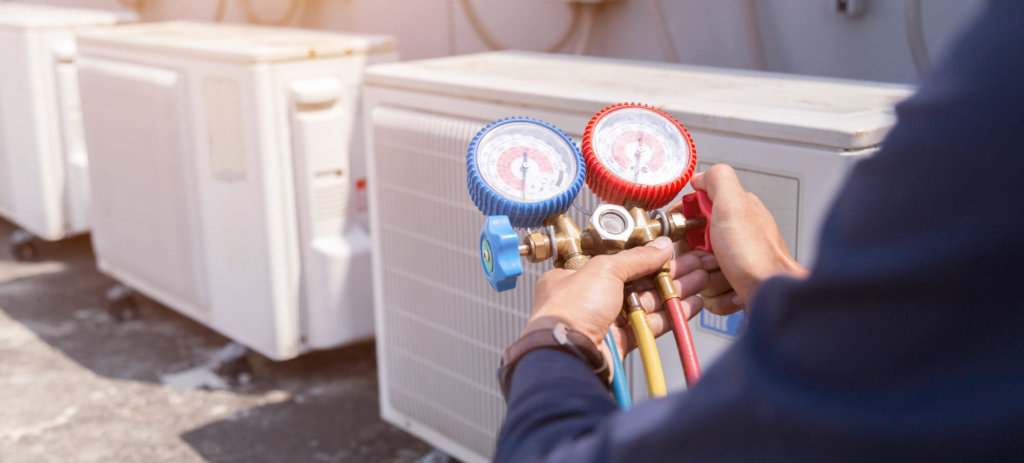
Technician is checking air conditioner ,measuring equipment for filling air conditioners.

As unfortunate as HVAC repairs are, the good news is many can be prevented or delayed with the right maintenance. Learn more here.

A new furnace can cost you anywhere from $2,000 to $7,000 on average, depending on the size of your house. A new central air conditioner, meanwhile, can cost between $2,500 and $15,000.

There will come a time when you need to replace both. But you can delay those replacements with proper maintenance on your HVAC system.

When you maintain your home’s HVAC system, you can steer clear of costly repairs. You assure you get as much life out of your HVAC system as possible before needing HVAC replacement.

Here are 7 essential kinds of HVAC maintenance:

1)  Replace Air Filter Regularly

The air filter inside your HVAC system is arguably its most important component. It protects your HVAC system by shielding it from:

  • Dirt
  • Dust
  • Allergens
  • Pet dander
  • Smoke & smog

Use a high-quality air filter and set a reminder to replace it every three months so your HVAC system runs efficiently. This reduces the risk of it breaking down ahead of schedule.

It’s one of the most essential types of HVAC maintenance.

2)  Clear Area by Furnace and AC Unit

Most furnaces are located in utility closets or basements. So it’s common for clutter to grow around them.

Don’t let too much stuff linger outside your furnace. It makes it hard for you to access your furnace and gathers dust, which can work its way into your furnace. Keep the area clear of clutter at all costs.

From the AC unit outside, clear away:

  • Dirt
  • Leaves & sticks
  • Grass clippings
  • Toys
  • Other debris

Nothing should be atop or against your AC unit.

Assure your AC unit is level. It also should sit on a concrete pad to prevent it from sinking into the lawn.

3)  Clean Evaporator and Condenser Coils

You have evaporator coils inside your HVAC system and condenser coils outside in your AC unit. Both play an important part in keeping your home cool in the heat.

  • Evaporator coils take the warm air inside your home and strip it of humidity so it can be efficiently cooled.
  • Condenser coils push hot air out of your home out so the indoor temperature is comfortable.

Both evaporator and condenser coils must be kept clean to let your HVAC system do its job. Both can get clogged with dirt and debris.

4)  Remove Blower Dirt, Dust, and Debris

Your HVAC system creates as much warm or cool air as you want, depending on the season. But if its blower doesn’t work, that “conditioned” air never makes it through your home.

Your HVAC blower sends warm or cool air  through the ductwork and air register. To work properly, clean it every month or so to get rid of dirt, dust, allergens and debris.

Test the blower to assure it does more than just make noise when your HVAC system runs.

5)  Don’t Let Condensate Drain Clog

The condensate drain in your HVAC system plays an important role. It takes the moisture your evaporator coils remove from the air and drains it away it.

Over time, mold, algae, allergens and more can clog your condensate drain. There’s simply no way for the moisture to drain away. This increases the humidity in your home and potentially causes serious HVAC problems.

Pour a mixture of bleach and water down the condensate drain each year to clear the drain. This should prevent clogs from forming in the first place.

6)  Check and Clean Air Ducts as Needed

When did you last inspect and clean ed the air ducts in your home?

If it’s been a while, a lot of dust and allergens has built up inside them. In some cases, even mold and mildew can grow in air ducts and send mold spores throughout your home.

The National Air Duct Cleaners Association recommends you clean air ducts about once every 3 to 5 years. Besides removing dust, such cleaning also reduces strain on your HVAC system.

7)  Open Air Registers and Keep Them Clear

Opening more of your home’s air registers also reduces HVAC strain.

Make sure at least 80 percent of your air registers are always open. Clear the areas around them to assure uninterrupted air flow.

This lets the warm or cool air spread throughout your home. You’ll notice a big difference when you open more air registers.

Make HVAC Maintenance a Priority

Regular maintenance extends the life of your HVAC system and reduces your energy costs.

But there will be times when you’ll need an HVAC professional. We provide the residential, commercial and industrial HVAC services you need to keep your HVAC system going strong.

5 Questions You Must Ask Before Buying a Used HVAC System5 Questions You Must Ask Before Buying a Used HVAC System

HVAC unit against a white background.

Summer without air conditioning can be downright miserable in the Fairfax area. If your air conditioner goes out and money is tight, you may be considering buying a used HVAC system to save on the cost of a new one. Today we’re going to answer some common questions about buying used HVAC equipment.

1. What Do You Know About the Equipment?

When you buy a new HVAC system, you generally focus on buying a good brand. You don’t have to worry too much about the individual unit you’re buying. Since it’s new, it’s unlikely to have developed any problems. If you find that there’s a manufacturer’s defect, that’s typically covered by warranty. You can be pretty confident you’re getting a machine that will work well for the foreseeable future.

When you buy used, you don’t have that assurance. You have to learn what you can about the equipment’s history. If you’re buying a barely used system from a reputable dealer, you may be getting a good deal. If you’re buying it from a homeowner, you need to ask yourself why he’s selling it in the first place. Does it even work? Did he maintain it? How often has it needed repairs before now? If you can’t be confident that the equipment is in as good shape as the seller says, you’re taking a huge chance by buying it.

2. Is There Any Kind of Warranty?

New equipment typically comes with a manufacturer’s warranty. The coverage of the warranty varies based on the manufacturer, but major brands typically offer a 10-year limited warranty.

While you can transfer many warranties if you sell your home, you can’t transfer them if you remove your HVAC system from the property where it was originally installed.

3. Are You Buying the Right Equipment For Your Home?

Correct air conditioner sizing is vital for good performance. When your A/C is the wrong size, you either waste energy with a system struggling to keep up, or you end up with moisture build-up from a system cycling off too frequently. If you don’t know how to calculate the correct size of the HVAC system you need, you run the risk of buying equipment that causes more problems than solves.

4. Who Will Install Your Equipment?

Professional HVAC installers are often reluctant to install any system that they can’t guarantee will work. If an installer puts in a used system and it doesn’t work, there’s no way of telling if the fault was with the equipment or the installation.

That leaves you with general contractors — or your neighbor’s cousin — who may or may not know much about air conditioner installation. Since one of the biggest causes of A/C malfunction is improper installation, you’re taking a big risk.

5. What If I Want New Equipment But I’m Not Made of Money?

There’s no doubt new HVAC equipment is a big investment. However, the benefits of having a new system with a full life ahead of it can’t be ignored. New systems tend to be more energy-efficient, so you save money on your energy bills. The security of professional installation and warranties are important factors to balance against the lower cost of used equipment.

ASK THESE 7 QUESTIONS BEFORE HIRING AN HVAC CONTRACTORASK THESE 7 QUESTIONS BEFORE HIRING AN HVAC CONTRACTOR

Ask These 7 Questions Before Hiring an HVAC Contractor

It’s no secret that a properly functioning HVAC system is crucial to the comfort of your home. But when it comes time to hire an HVAC contractor, how can you be sure you’re getting someone who will do the job right? Here are some important questions to ask before hiring an HVAC contractor in Annapolis, MD:

ARE YOU LICENSED AND INSURED?

When hiring an HVAC contractor, you want to be sure the company is properly licensed and insured. This protects you in case something goes wrong during the job. Be sure to ask for proof of both before moving forward.

When you ask about licenses and insurance, inquire about other credentials the contractor may have. This can include things like industry certifications or training. The more credentials a contractor has, the better.

WHAT’S YOUR EXPERIENCE?

You’ll want to hire a contractor with plenty of experience. Ask about the contractor’s history, how long the company has been in business and the types of projects the company typically works on. The more experience contractors have, the better equipped they will be to handle your project.

With these, you can also ask about references. Good contractors should be able to provide you with a list of past clients who can vouch for their work. This way, you can get first-hand accounts of what it’s like to work with them.

WHAT’S YOUR POLICY ON OVERTIME CHARGES?

Some contractors will charge you extra for overtime, and others won’t. It’s important to know the policy before hiring a contractor because this can be a significant cost if you’re not careful.

You need to understand how contractors charge for overtime. If they charge by the hour, you need to know their hourly rate. If they charge a flat fee, you’ll want to know how much that fee is.

CAN YOU PROVIDE A WRITTEN ESTIMATE?

When hiring a contractor, you’ll want to get a written project cost estimate. This way, there are no surprises down the road. The estimate should contain a list to show exactly what you’re paying for.

Be sure to ask about any other documents the contractor will need, such as a contract or proposal. These can give you additional information about the project and help you make an informed decision.

WHAT’S YOUR WARRANTY POLICY?

Most contractors will offer some warranty on their work. This protects you in case something goes wrong once the job is complete. Be sure to ask about the warranty terms, such as how long it lasts and what it covers.

You should also inquire about any other guarantees the contractor offers. For example, some contractors may guarantee their work for a certain period. Others may offer a money-back guarantee if you’re unsatisfied with the results.

This will help you understand what type of protection you have if something goes wrong. It is also safe practice to save all paperwork related to the warranty in case you need to use it later.

WHAT ARE YOUR PAYMENT TERMS?

HVAC contractors will typically require some payment upfront. This is usually a deposit that goes toward the project’s total cost. Be sure to ask about the payment terms before hiring a contractor.

You’ll also want to know when the final payment is due. Some contractors will require full payment upon completion of the job, while others will give you a grace period to make the payment. It’s important to know this so you can budget accordingly.

WHAT’S YOUR CANCELLATION POLICY?

Sometimes, you may need to cancel your project after hiring a contractor. Knowing the contractor’s cancellation policy is important so you don’t lose your deposit.

Some contractors will allow you to cancel without penalty if you give them enough notice. Others will charge a cancellation fee, which could be a percentage of the total project cost. Be sure to ask about this before hiring a contractor.

6 Must-Know Tips to Prevent Costly HVAC Repairs6 Must-Know Tips to Prevent Costly HVAC Repairs

Replacing AC filter.

With details on why HVAC preventative maintenance is essential and how it can affect your household, let us look at the six crucial steps you need to take regularly to ensure the proper functioning of your air conditioner.

1. Clean the Condenser or Heat Pump

Outdoor air conditioners and heat pumps can get notably dirty, causing the system to work harder to create the necessary cold and warm air you want in your home.

Cleaning the condenser and heat pump reduces the likelihood of damage to any internal components. You should ensure that there is no debris on the top and sides of your outdoor air-conditioning pumps and units.

Use your garden hose on the fins, making sure that you get in between the crevices to get all the gunk out.

Also, double-check that your unit is level. If lopsided, the refrigerants that are so important in helping your AC work well, will be disjointed. Your condenser and compressor could be at an increased risk of breaking down as a result.

2. Check the Filter

One of the most apparent reasons for air conditioner repair is a dirty air filter. Changing the filter is one of the more straightforward ways of doing HVAC maintenance to improve the air conditioner’s efficiency, reduce energy costs of heating the home, and decrease the likelihood of needing repairs.

Check your filter monthly to ensure it isn’t dirty or clogged. If it is, it’s a good idea to give it a good wash and run air over it. As for changing the filter, about once every three months should suffice. If it looks dirtier than usual, then replace it at once, especially if you have pets.

The AC filter can freeze if it is too dirty and then thaw, causing water damage.

If you have a reusable filter, clean it gently with a soft cloth. After that, add some mild soap and water.

If it’s not reusable, head to the store and buy a new one. If you or your family have allergies, it’s good to get a HEPA or hypoallergenic filter. These filters will help the most purify the air.

3. Regular or Annual Professional Check-Ups

A check-up comprises an on-site visit from an HVAC technician who will examine the HVAC system and ensure it operates at optimum performance. Depending on the technician involved, the inspection may include doing any of the following:

  • Ensuring the fan is working correctly
  • Cleaning the coils
  • Checking (or possibly changing) the air filter
  • Cleaning drain lines
  • Checking the refrigerant level
  • Checking for leaks in the heat exchanger

A check-up can be a one-time event or provided yearly as part of regularly scheduled maintenance.

A professional check-up only needs to be completed once a year and aids households to ensure that their HVAC does not break down when they need it most during the peak summer and winter months.

Getting your HVAC serviced means that all the components will be cleaned and inspected, and working at their optimal best, preventing costly energy bills, not to mention expensive, unexpected repair bills.

4. Clean the Drain Lines

An air conditioner, along with cooling, also takes out the moisture from the air. This moisture then accumulates within the drain lines of the air conditioner and is directed outside. Over time, with the accumulation of dirt and dust, the drain lines can become clogged and even be a home for algae and mold.

It is thus a good idea to periodically clean the drain line. Take off the air conditioner’s outer cover and clean the drain line with a clean piece of cloth. Moreover, you can rinse it with a mixture of water and vinegar, removing any mold which might have formed.

5. Keeping the Outdoor Unit Clear

The outdoor unit is continuously exposed to weather and other environmental factors such as dirt and debris. Furthermore, growth and vegetation can cover the outdoor unit over time and prevent the exhaust air from being ejected effectively. Sometimes, the branches and leaves can even get inside the outdoor unit and interfere with the fan’s smooth functioning.

It makes sense to monitor the area around the outdoor unit, and observe any bushes or leaves that might need trimming. This is a DIY job, which does not take up a lot of time, but can save you significant expenses later on.

6. Get a Smart AC Controller or a Smart Thermostat

By making your HVAC system smart, you can access additional features that can help with preventive maintenance. For instance, smart thermostats or smart AC controllers allow you to monitor your usage history and receive alerts every time your AC may need a filter status cleaning.

Top 5 Tips for Maintaining Your HVAC SystemTop 5 Tips for Maintaining Your HVAC System

Mowing the lawn and painting your home are easy ways to maintain your home and increase its value. In the same way, there are easy things you can do to take care of your air conditioning and heating equipment to keep it running when you need it most. And, as an additional benefit, it can reduce unexpected emergency calls and can lengthen the life of your HVAC equipment. A little preventive maintenance in the spring and fall goes a long way. Here are our top five tips to add to your home maintenance routine:

Change Your Filters

When was the last time you replaced the filters on your unit? Disposable filters keep your system clean and take out the large particles from your indoor air. Aim to change them every 1-3 months. If is allergy season or you have pets in your home, you may consider replacing your filters more often. We recommend picking a filter rated MERV 7-11. Anything more will reduce the airflow on your system which can put an unnecessary strain on your system and will negatively affect its efficiency, too. If you have an air purification system, follow the manufacturer’s instructions for servicing those filters, too. Often ductless systems require that filters be cleaned (See a helpful DIY.)

Clean Your Condensing Unit

Most air conditioners have an outdoor condensing unit/heat pump sitting outside with a fan on top to disperse heat in the summer. The metal fins on the condensing unit frequently get clogged up with dirt, pollen, and grime. Once each season, spray the outside of the unit with a water hose to clean it. Warning: Do not use a pressure washer because it will permanently damage your unit.

Visually Inspect and Create Clearance Around Your Outdoor Unit

Remove the build-up of leaves and overgrown vegetation so they do not interfere with the air flow of your outdoor unit. You can trim any bushes or trees also so your unit has plenty of clearance, about 2 feet, on all sides. Keep a close eye if you have bushes or trees that give off excessive pollen, such as Cottonwood trees in particular. They are notorious for clogging up condensing units.

Check Your Evaporator Coil’s Drainpipe and Drain pan

If you are unsure where your drain pipe is, have your service technician show you where to find it. Check your HVAC system’s drainpipe and clear any blockages of the algae/mold that sometimes builds up there. A wet-dry vacuum can suction out any plugged up areas, and bleach can help clean it too. A clogged drain line is one of the most common breakdowns we fix in Houston, Texas during the spring and summer. Often customers learn of it when water comes pouring through their ceiling unless a protective float switch or “ceiling saver” is installed which switches off the air conditioning to prevent damaging leaks.

Call in a Professional for Regular Maintenance

We recommend having a licensed professional come in and perform preventative maintenance twice a year, including flushing the coils, checking the drain pan and drainage system, vacuuming the blower compartments, looking at the voltage, checking refrigerant levels in the air conditioning unit, evaluating furnace operation, checking voltage on motors and loose wires. Spring is a good time to service air conditioning equipment and in the fall, we service heating equipment. With luck, we will catch any problems before they become a major inconvenience.

Need an HVAC Partner?

Contact the experts at Ottos Hvac to take care of your repair and maintenance needs for any make or model of air conditioning or heating system in residential and light commercial settings.

6 Benefits of HVAC Maintenance6 Benefits of HVAC Maintenance

6 Benefits of HVAC Maintenance

Regular HVAC maintenance is not only essential for extending the life of your system. It also keeps your family comfortable, safe and healthy. In fact, signing up for an HVAC maintenance agreement can save folks in Union Springs, Alabama, more money than they may realize. Read on to learn about all the benefits HVAC maintenance plans offer.

Fewer System Breakdowns

Homeowners often face stressful, unexpected situations requiring emergency repair. Your HVAC breaking down in the middle of a hot Alabama summer is certainly one of them. With an annual maintenance agreement, you drastically reduce the chances of your system breaking down when you least expect it.

During each maintenance service, your HVAC service technician will check for issues before they have a chance to turn into costly problems. Since your system also gets a tune-up during each service, you can rest assured your air conditioner is in optimal working order.

Reduced Costs

It’s important for your HVAC system to operate efficiently. An optimized system uses less energy to heat and cool a home, which keeps more money in your pocket. If you’ve noticed your utility bills are higher, prioritize scheduling an HVAC maintenance appointment.

You won’t only save on operating costs, though. A maintenance plan also helps you save on repair and replacement costs too.

Regular inspections identify preventable problems so that you aren’t faced with an unexpected bill if the condenser or heat pump fails. Considering the money you could potentially save, a maintenance service agreement is well worth the upfront cost.

Longer System Lifespan

Whether you’ve purchased a house with an HVAC system or you’ve had your own system installed, buying a brand-new HVAC unit probably isn’t on your radar anytime soon. Unfortunately, unless you schedule a regular tune up, your HVAC unit will wear out over time. They simply aren’t engineered to run forever.

Most HVAC systems are designed to last for 10 to 15 years. Signing up for an HVAC service agreement can help reach this milestone or even surpass it. Why take chances with such a major investment? Get your system the attention it needs to keep functioning for years to come.

Healthier Air

A dirty HVAC system can’t supply clean, healthy air to your family. When the ductworks clog with dust, pet dander and other contaminants that are harmful to your family’s health, everyone is at risk.

Sticking with a regular maintenance agreement allows your service technician to clean the coils, fan motor and other system parts. This drastically reduces your exposure to indoor allergies. In fact, regular maintenance is a must for anyone who suffers from asthma, allergies or chronic respiratory problems. Your family will notice a difference almost immediately.

Familiarity

One of the extra perks of sticking to an HVAC maintenance plan is the fact that you get to know your HVAC professionals. Not only do you always know who’s working on your system but the service technicians become familiar with your home and better understand what it needs for your family to enjoy maximum indoor comfort.

Being familiar with one another over the course of an HVAC agreement is always best for everyone involved. That’s because it’s easier to spot problems and communicate needs as they arise. We never charge overtime fees for maintenance services, and we were awarded the AC Southeast Dealer of the Year in 2016. We’re a trusted part of the community, and we love getting to know our homeowners.

Peace of Mind

Everyone wants to feel comfortable at home. With a maintenance service agreement, you can always feel confident that your service technician has gone over the checklist in detail, identifying any potential problems and recommending solutions that will save your family money in the long run. If you’re the type who worries whether your air conditioner will last through the summer, it’s time to call the professionals.

Don’t put off HVAC maintenance any longer. Schedule your next service appointment by calling Ottos-HVAC inc.

5 Tips For Hiring An HVAC Contractor5 Tips For Hiring An HVAC Contractor

Chester, South Carolina - Heating & Air Conditioning Contractor - Cudd Heating & Air Conditioning

Finding a reliable heating and air conditioning contractor in the greater Chester, South Carolina area can be both challenging and annoying. Challenging because there are tons of contractors to choose from, and annoying because you don’t have an objective way of knowing which HVAC company you should hire. That’s why the Cudd Heating & Air Conditioning team has put together our five top tips for hiring and HVAC contractor.

1. Know What You Want
Before you even begin to look for potential HVAC contractors to hire, you need to know what exactly you want from a HVAC company. Do you need a company that offers financing options? Do you prefer a company that offers 24/7 emergency heating & air conditioning service? Is location important to you? These are all some of the questions you should ask yourself before beginning your HVAC contractor search.
2. Do Your Homework
Now that you have a general idea of what you’re looking for, you will want to do your homework and research as many HVAC companies as you can. Use your resources to locate reliable local heating and cooling companies in your area – whether that’s in Chester, SC or elsewhere. Create a list of potential candidates so you can begin to check the reputation of each company.
3. Read Online Reviews
Online reviews are a wonderful resource to really get to know a company before you begin working with them. Do they have majority good reviews or bad? Do they respond to their reviews? How do they handle the bad review? Make sure you read reviews on Google, Facebook, Yelp, etc. to really get a good idea of your prospective HVAC contractors.
4. Look Into Professional Standards
When hiring a HVAC contractor, it’s important that you know they are reliable and trustworthy. Reliable HVAC contractors are professional in all aspects of their business. They should have prompt and courteous technicians as well as friendly and knowledgeable office staff. Don’t hesitate to pay a visit to the company’s shop or office either. Their facility can tell assure you that this contractor has been in business and intends to remain in business for years to come.
5. Request a Written Estimate
Finally, make sure you request a written estimate or quote from your final prospects. It is vital that you get details in writing rather than over the phone. Additionally, you will want to make sure that your HVAC contractor has actually seen your home before giving you a quote as it is impossible to tell what kind of unit a home will need over the phone. If you have any other questions about hiring a HVAC company, please give Ottos Heating & Air Conditioning a call today! we are always happy to help our customers!