Ottos HVAC Blog What Percentage Should You Mark Up Your Material for Doing HVAC Work

What Percentage Should You Mark Up Your Material for Doing HVAC Work

HVAC companies that service residential and commercial heating and air systems have an important job — no one likes to be hot in the summer and cold in the winter. Even though people need your services, they don’t want to pay an exorbitant amount to get their HVAC systems repaired or replaced. At the same time, you need to make enough money to pay your staff and your bills.

Break-Even Point

  1. Before you decide on how much to mark up your materials, know how much you need to make on the job to break even. Add up all your bills and divide that by the number of jobs your staff typically complete in a month. Calculate the number of hours the job should take, how much your staff person makes per hour — including costs such as health insurance and workers’ compensation — how much your charge per hour and the cost of the materials. If you need $50 per hour to cover all your staff costs and you charge $100 per hour for labor, that’s $50 toward your break-even point. If you need a profit of $100 per job to keep yourself in business, mark up the materials accordingly so they make up the other $50.

Markup vs. Margin

  1. Markup and your profit margin are calculated differently. The amount you mark up your materials doesn’t equal your profit margin percentage. Understand the difference so you can more accurately set your markups to make the profit you’re expecting. For a part that you paid $100, marking it up to $150 gives you a 50 percent markup: multiply 100 by 0.50 to get a $50 markup. To get your margin, divide the markup — in this case $50 — by your cost, $100. You get 0.33, or 33 percent. In this example, a 50-percent markup equals a 33 percent profit margin.

Parts Markup

  1. A standard markup in a non-retail business is 100 percent, meaning you charge the customer twice what you spent on the part or material. This requires accurate bookkeeping and estimating skills because prices change constantly. Know what you spent on each part before you can mark it up correctly. Your overall cost for the job also includes a labor markup, charging more per hour for your technician’s time than you pay him. These two markups can work together to make your business profitable. When you mark up your materials by 100 percent, you typically mark up your labor less, such as 25 percent.

Overall Markup

  1. Instead of setting a percentage to mark up your materials, provide overall job estimates. Decide how much you need to make on each job and provide an estimate that increases the total by a percentage instead of breaking labor and materials into different pieces that need to be marked up. For example, if your actual labor cost, including insurance and commissions, is $400 and your materials are $300, your total cost to do the job is $700. Mark that up so you get a net profit of 30 percent by dividing $700 by 0.70, and you get an increase of $300, for a total customer cost of $1,000. Set your overall markup percentage based on your break-even point to ensure that the job makes enough to pay your bills and, hopefully, makes a profit for the company.

Related Post

Palmetto Roofers: Restoring a Spartanburg SC Home After a Hurricane with Expertise and CarePalmetto Roofers: Restoring a Spartanburg SC Home After a Hurricane with Expertise and Care

At Otto’s HVAC, we know that when disaster strikes, it takes a team of skilled professionals to get things back to normal. Recently, we faced a challenging project after a hurricane caused a massive tree to fall on a home, severely damaging the roof. To ensure the job was done right, we called in the experts: Palmetto Roofers, based in Spartanburg, SC.

Their work wasn’t just impressive—it was transformational.

The Challenge: Hurricane Damage and a Fallen Tree

The storm left this home in rough shape. The roof had significant structural damage, exposing the interior to further harm from wind and rain. Our HVAC systems were also at risk due to the open exposure. Before we could proceed with any repairs or replacements on our end, the roof needed immediate attention.

That’s when Palmetto Roofers stepped in.

A Roof Restored: Palmetto Roofers in Action

Palmetto Roofers wasted no time in addressing the damage. From start to finish, their team demonstrated why they’re known as one of the most reliable roofing companies in Spartanburg.

  • Assessment and Planning: They quickly assessed the damage and developed a detailed plan to restore the roof. Their clear communication made it easy for everyone involved to stay on the same page.
  • Expert Repairs: The team worked efficiently to remove the fallen tree, repair structural damage, and replace the roofing materials. They matched the new shingles seamlessly, leaving no trace of the damage.
  • Attention to Detail: Beyond just fixing the roof, Palmetto Roofers ensured that gutters and flashing were restored to prevent future issues, protecting both the house and our HVAC system from water damage.
  • Speed and Efficiency: Time was of the essence, and Palmetto Roofers delivered. Despite the extensive damage, they completed the job quickly and thoroughly, allowing us to get back to work installing and servicing the HVAC system.

The Result: A Home as Good as New

By the time Palmetto Roofers finished, it was as if the storm had never happened. The roof looked flawless, and the house was secure and weather-tight. Their impeccable work gave the homeowners peace of mind and allowed us to complete the HVAC repairs without delay.

Why We Recommend Palmetto Roofers

Having worked with them firsthand, I can confidently say that Palmetto Roofers is a company you can trust. They’re professional, dependable, and deeply committed to quality craftsmanship. Whether it’s routine maintenance or emergency repairs after a hurricane, they bring the same level of care and expertise to every job. More about Palmetto Roofers:

Palmetto Roofers
187 N Church St
Spartanburg, SC 29306
(864) 416-2243

Final Thoughts

At Otto’s HVAC, we’re proud to collaborate with companies like Palmetto Roofers. They played a crucial role in helping this family recover from the storm and move forward. If you’re in the Spartanburg area and need roofing services, Palmetto Roofers is the team to call.

Controlling Mold in Your Commercial Property With Your HVAC SystemControlling Mold in Your Commercial Property With Your HVAC System

Mold growth is an all-too-familiar problem for commercial property managers. When overlooked, it can cause discomfort and irritation for the building’s occupants while also compromising indoor air quality. To better control mold in your property–and prevent its development–you’ll need to take a closer look at your HVAC system. A trusted provider of quality central air conditioning, All Weather Heating & Air Conditioning, shares the essentials you need to know here.

office space with AC on ceiling

Why You Should Keep Tabs on Your Commercial HVAC System

The fact is, mold doesn’t just appear out of nowhere–it generally forms under specific conditions. Mold requires water, a food source and the right temperature range. The food source is negligible–your commercial property is chock-full of them, ranging from drywall and carpeting to paper, wood and furnishings. The water comes from the excess moisture caused by relative temperatures that encourage mold development–and these are elements where the HVAC system is involved.

Your HVAC system can have a significant effect on the indoor moisture level of your commercial property. If the system isn’t well-designed or has performance issues, not only will it generate moisture that promotes mold growth, it will also give mold spores a handy mode of transportation throughout the building via the ducts. For this reason, make sure to pay attention to your heating and air conditioning system and take measures that allow it to effectively control mold development. These may include:

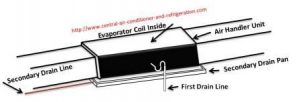
  • Checking the coils and drain pans. The coils dehumidify the air and cause condensate water to drip into the drain pan. When water doesn’t drain properly via the deep seal trap in the pan, however, it builds up and encourages mold to grow. Make sure the drain pan is properly cleaned and sloped to prevent this.

  • Using ventilation and dehumidification equipment. This helps get rid of excess indoor moisture in your commercial property and eliminate the potential for mold growth. All Weather Heating & Air Conditioning offers a wide range of ventilators and dehumidifiers from top manufacturer Bryant® to meet your needs.

  • Investing in regular HVAC inspections and tune-ups. Some components of your HVAC system can become wet or develop issues that lead to mold growth. These include outdoor air dampers, ducts and air filters. You’ll be able to catch these problems early on–and deal with them as necessary–by turning to All Weather Heating & Air Conditioning for regular inspections and tune-ups.

Five Reasons Why HVAC Maintenance Is ImportantFive Reasons Why HVAC Maintenance Is Important

1. Improve Air Quality

Normally, you probably have a few windows open in your house to get some fresh air in. But once it gets cold, you probably shut yourself in; you’ll have to deal with the air being a little staler than you’re used to.

Since you’re breathing more circulated air, maintenance is essential. This ensures you have clear and working air filters so you’re not breathing in old dust and other allergens.

2. Catch and Fix Small Problems

Whether you use your HVAC system often or rarely, it’s bound to run into some issues due to either wear and tear or infrequent usage. If you get maintenance done regularly, the HVAC experts can catch any small problems and fix them before they grow into larger and pricier issues.

Maintenance can even prevent problems from forming in the first place!

3. Get the Most out of Your HVAC Unit

Like we mentioned above, if you have an HVAC professional regularly checking up on your heating and AC, they’ll spot issues while they’re still small. This means less wear and tear on your HVAC system. As a result, it’ll last for longer than if you’d foregone maintenance.

4. Save on Utility Bills

When winter hits, you can count on running your HVAC unit pretty much constantly. That is probably already costly; do you really want to be paying more than necessary?


Without maintenance, your HVAC system might run inefficiently, which can drive up your utility bills. Do yourself a favor and pony up the cash for some HVAC maintenance before the temperatures drop. Your bank account will thank you later.

5. Reduce the Chance of Emergency Repairs

You never fully appreciate your HVAC unit until it’s completely out of commission. Sure, it may be operable now, but do you really want to chance it in the dead of winter, especially if the last time you got maintenance was…never?


Getting your HVAC system a clean bill of health can give you peace of mind while you and your family sit nice and cozy in your home, all winter long.

But don’t forget to keep getting maintenance done! It’ll be just as important when the summer sun comes out to play and you want to escape indoors!

HVAC Maintenance Is Important—Always!

Now that you know how HVAC maintenance is important, what are you waiting for? Make sure your HVAC system is in good working condition, especially before the cold weather really settles in.