Ottos HVAC Blog What is an HVAC contractor & what do they do?

What is an HVAC contractor & what do they do?

f you live in a home with indoor heat and air conditioning, you know how important it is to keep the system working properly.

Without HVAC systems operating at peak efficiency, life can become extremely uncomfortable quickly.

That’s why hiring an HVAC contractor when your system begins acting up is so important. HVAC contractors have the training and experience to fix your HVAC system fast.

But what does an HVAC contractor do and what kind of services do they offer? How do you choose an HVAC contractor? Keep reading to find out.

What is an HVAC contractor?

An HVAC contractor is someone who specializes in heating, ventilation, and air conditioning (HVAC) systems. They are professionals who are licensed and insured to install, repair, and maintain HVAC systems in homes and businesses.

HVAC contractors can help homeowners maintain their HVAC systems so they run efficiently and cost-effectively year after year. They can also help homeowners plan for and install new HVAC systems when their current system stops working correctly or no longer meets their needs.

HVAC contractors are also responsible for making sure that all installed systems are properly maintained and operate safely. This includes making sure that all electrical work is up to code, that air ducts are properly sealed and filtered, and that gas lines are properly installed and capped.

What does an HVAC contractor do?

As we’ve said, HVAC contractors install, repair, and maintain HVAC systems. They can also provide HVAC maintenance and replacement services when systems break down and need to be repaired or replaced.

Regardless of the service they provide, the main goal of an HVAC contractor is to keep you and your family comfortable. If your system is running at peak efficiency, you can expect to save on energy costs and have a reduced carbon footprint.

When your HVAC system is not working properly, an HVAC contractor can help you get it back up and running as quickly as possible.

Here’s a look at the three main services that HVAC contractors provide:

1) HVAC maintenance services

Regular HVAC maintenance service can extend the life of your HVAC system, reduce your chances of needing expensive repairs, and save you money on energy bills.

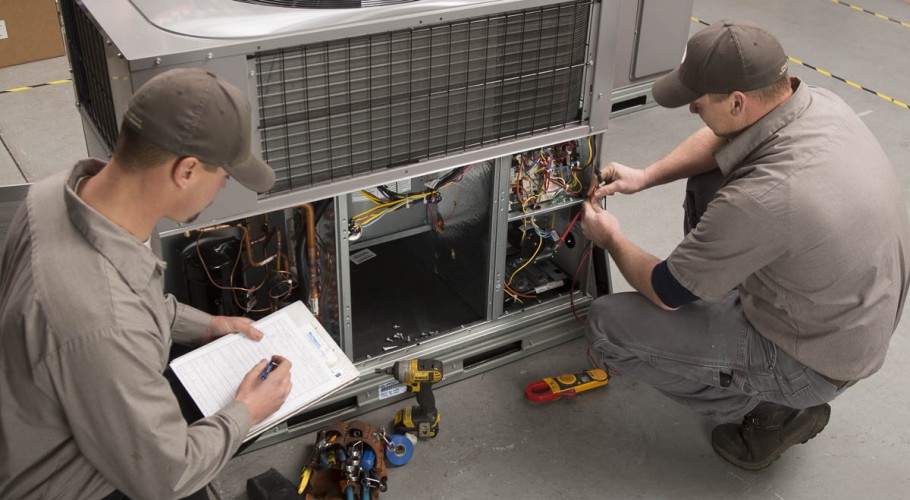
A trained HVAC contractor can inspect your system and identify any issues that need to be addressed. They can also make sure that your system is in proper working order.

While you can perform some maintenance tasks on your own, HVAC contractors have the training and expertise that homeowners don’t have. They can do a more thorough inspection and address issues you may not have even realized existed.

Common HVAC maintenance services include:

  • Cleaning or replacing air filters. Air filters should be cleaned or replaced every month or as needed. Dirty filters can cause your HVAC system to work harder, resulting in higher energy bills. When filters are old, they can also pose a health risk to your family.
  • Flushing your cooling system. Flushing your cooling system removes dirt, sand, and other debris that accumulates in the pipes of your cooling system. Keeping your cooling system clean reduces your risk of needing maintenance or repairs. It can also help extend the life of your HVAC system.
  • Checking and maintaining electrical components. Electrical components such as circuit breakers and cooling fans are essential to keeping your HVAC system in proper working order. An HVAC contractor can make sure these components are working properly and that your system is protected from electrical issues.

2) HVAC installation services

HVAC contractors also can help install new systems in your home or business. HVAC contractors have the experience needed to plan the best system for your home, install it correctly, and ensure it is operating safely.

An HVAC contractor will work with you to choose a system that meets your needs and fits your budget. They can also help you navigate local building and zoning codes.

3) HVAC repair services

HVAC contractors can also provide repair services for your existing HVAC system.

If your system breaks down and needs to be fixed, you don’t want to wait. The sooner you get your system back up and running, the less discomfort you’ll have to deal with and possibly less money you’ll waste on energy bills.

Some HVAC repairs can be done quickly, while others may take longer. In some cases, it may be more cost-effective to replace your system than to have repairs done.

HVAC contractors can help you decide what is best for your situation. They can also help you navigate any homeowner’s insurance that you may have that could cover the cost of repairs.

4) HVAC replacement services

When your HVAC system breaks down beyond repair, it will need to be replaced. Some HVAC contractors also offer HVAC replacement services.

Before choosing a new system, an HVAC contractor will help you assess your current system and determine what size you need and what type of system would be best for your home.

They can also help you navigate the types of rebates and incentives that may be available to you when making your decision.

Some HVAC contractors may even provide financing for HVAC replacements so you can spread out the cost over time.

How to choose an HVAC contractor

The best place to start your search for an HVAC contractor is through friends and family. Ask them if they’ve had a contractor or company that they’ve had a good experience with in the past.

You can also search for an HVAC contractor online. Checking contractor search sites like Angi’s List or seeing Google’s top recommendations for contractors in your area is a quick way to build a shortlist of candidates.

Remember, not all contractors are created equal. Choose an HVAC contractor who has experience in your area and is knowledgeable about your type of HVAC system.

Before choosing an HVAC contractor, make sure they are licensed and insured if required by your state, city, or local area. You can typically check to see if contractors are licensed and insured in your area by visiting the website of your state’s government.

When you are interviewing contractors, make sure you ask the following questions:

  • How long have you been in business? A contractor who has been in business for many years is more likely to be experienced and knowledgeable than someone who has just started out.
  • Do you specialize in HVAC systems? An HVAC contractor who specializes in your type of system can help you make the best decision for your home.
  • Do you have experience installing the type of system I’m considering? An HVAC contractor with experience installing your system can help you make sure it’s installed correctly. A contractor with these attributes can help you choose the best system for your home, install it properly, and maintain it for years to come.

Choosing an HVAC contractor may seem like a daunting task, but it doesn’t have to be. Be sure to check out online reviews and talk to friends and family to narrow down your search.

Next, give the contractor or company a call to get an idea of their experience, pricing, and their projected timeline for getting the work done. You may even be able to get a free consultation or estimate.

Once you feel comfortable with a contractor, move forward with the project and give your HVAC system the love it deserves!
Related Post

WHAT IS HVAC AND HOW IS IT DIFFERENT FROM AIR CONDITIONING?WHAT IS HVAC AND HOW IS IT DIFFERENT FROM AIR CONDITIONING?

There was a time when “HVAC” really was a term thrown about only by industry professionals and those wealthy enough to pay for it. Now, however, the entire industry has opened up. Google is littered with “what is HVAC” searches.

It’s become an almost generic term for air conditioning, used synonymously by people in all environments. But what does HVAC mean, exactly? How does it factor into your home or business, will it be heating or cooling? And what, if anything, is the difference between it and air conditioning?

These are the important questions, as we move into a world of better and better air control systems for spaces of all shapes and sizes. Because, ultimately, even with dozens of options to choose from, the only way to make a truly informed decision is to be, well, truly informed.

So join us, as we define HVAC, define air conditioning, and break down the differences between these two concepts.


WHAT IS HVAC?

Let’s start right off with an important question: “What does HVAC stand for?”. Short for heating, ventilation, and air conditioning, HVAC is responsible for heating and cooling a building. It’s also a source of proper ventilation, allowing for moisture to escape.

HVAC units can take on many shapes and sizes, all offering different benefits depending on their design and the spaces they’re being used in. Units may include any combination of the following:

  • Boilers
  • Air conditioning units
  • Ducts and moisture vents

Not all HVAC units are air conditioning units, even though AC units are included under the HVAC umbrella. As outlined above, what’s important to understand is that it’s actually a larger term. Think of it as an umbrella term that applies to all sorts of interrelated air control systems.


A CLOSER LOOK: HOW DOES YOUR HVAC WORK?

There are instances where the HVAC components may operate independently of each other. What’s more common, however, is for each component to work alongside the others. These so-called “combined systems” include both central heating and AC systems.

But make no mistake: your HVAC system is more than just a convenient way to warm up or cooling the space you live or work in. It’s a way to fully transform your indoor air quality and create a comfortable environment for everyone inside.

HVAC systems are available in several different variations. However, even with that said, at their core, they’re all based on the same essential build concepts. And it starts outside, not inside.

Fresh air is sourced and brought in from the outside environment by way of a process called “ventilation”. This can be carried out in one of two ways.


NATURAL VENTILATION

Ventilating your space naturally is done without specialized equipment, construction, or add-ons. We see this present in most homes, actually, in the form of any entry and exit points into the building. When the natural air outside moves through your windows, doors, and vents of its own accord, that’s natural ventilation.

Where is this most useful? Natural air exchanges like this are important in replenishing your oxygen levels, for starters. It’s also useful in removing odours and excess moisture from your home, as well as filtering out carbon dioxide.


MECHANICAL VENTILATION

Next, we have mechanical ventilation. This is a system that uses mechanical systems to transport air both into and out of the building. Old-fashioned architecture made it so most buildings had ready access to natural ventilation. Most homes, businesses, and official buildings made use of doors and windows to bring natural air from the outdoors, indoors.

Modern architecture is different, however. Contemporary builders opt for creating much more tightly-sealed homes, in general. This is a design philosophy that makes mechanical ventilation all the more important in households with HVAC systems.

Air enters the building using a specially designed air inlet unit, where it is immediately put to work. Air enters via the filter and is routed to different areas where it will be most needed. Specifically, it will be used in removing dust and dirt, allergens, and various other particles. This same air is used both in heating and cooling processes, and also works against excess humidity in the air.

Finally, once the air has been filtered and brought up or down to the appropriate temperature, it is headed home. In the case of a central system, this movement takes place via a network of ducts, allowing the air to travel wherever it is needed.


WHAT IS AIR CONDITIONING?

An air conditioner or AC system is specifically designed to cool or heat the air. In some circles, a contractor may call any unit that controls the air, whether hot or cold, an air conditioner.

For our purposes, however, and to keep the process as uncomplicated as possible, we won’t be using this convention. We’ll break it down like this: a system designed to condition the air is an air conditioner. Any system that works to cool or heat up the air while pushing out moisture via air vents would be referred to, specifically, as an HVAC unit.

We need to be careful here, most if not all AC units heat as well as cool these days, they refer to this as a “heat pump” which in essence is reversing the refrigeration cycle to provide heat, more and more these days buildings are dispensing with traditional “wet” systems as air conditioning systems have become more reliable and more importantly very efficient against fossil fuels.


A CLOSER LOOK

There are different kinds of air conditioning and HVAC systems. Let’s take a closer look at some of the options available;

Window Unit

A window air conditioner or heater is a small unit that is installed in and sits on the inside of a window sill. These AC units are usually smaller but actually offer a pretty powerful output. In spite of this, however, they are best used in small spaces for maximum efficacy. Studio apartments and small rooms work best, in this regard.

One big benefit of window units is their price. For the budget-conscious, this is one of the cheapest cooling options out there, especially for the quality of the product. Expect to pay only a few hundred pounds at a time, both for the unit itself and for installation.

Central Air (Air Handling Unit, AHU)

Central air conditioners are commonplace for cooling and heating. They’re especially useful in large spaces, where the interconnecting air ducts guide and release air to the rooms where it is needed.

The system itself will include both outdoor and indoor parts. Because of the size of the installation, these tend to be lifelong investments, put into buildings that owners own for many years.

They also involve big investment, initially. The system itself, however, is one of the most effective and has been known to last up to 20 years or more under the right circumstances.

The Mini Split System

The mini-split system is quite similar in design to central air. The big difference is the fact that the ductwork is largely removed and in its place refrigeration pipework is installed.

One of the biggest draws when it comes to ductless systems such as these is in the reduced cost of operation.

The system is more aesthetically pleasing than some other options, since there is no need to install complicated ducts.

And Now You Know…

When we try to define HVAC, air conditioning, and the differences between them, we immediately run into a problem. The idea of “what is HVAC” and “which one is air conditioning” has a simple answer: there is no real difference. Air conditioning is a subsection of HVAC, with units focusing more on moving air through a space.

GET ANSWERS TO THE 10 MOST COMMON HVAC PROBLEMSGET ANSWERS TO THE 10 MOST COMMON HVAC PROBLEMS

While some HVAC issues are simply a matter of cleaning coils and filters, many of the 10 most common heating and cooling system problems will develop into much bigger concerns if not serviced early. Most of these can be avoided with regular preventive maintenance calls. It is wise to have your system checked annually to prevent outages during extreme weather.

The 5 Most Common Commercial HVAC Problems

1) LACK OF MAINTENANCE
Regularly scheduled maintenance by a licensed service contractor is a MUST to keep your system in proper working order. Many of the most common furnace problems can be avoided with proper maintenance by a certified service contractor. You have likely invested thousands of dollars in your home heating system. Why not protect that investment? If you neglect to perform regular maintenance you will most likely experience unexpected costly breakdowns, increased energy cost, poor performance and frustration.

Protect your investment and gain peace of mind by calling Jennings Heating at (330)355-3135 to have a NATE certified technician inspect your HVAC system today.

2) DIRTY FILTERS

How often should I change my filters? - PAC Plumbing, Heating, Air  Conditioning
Replacing your filter regularly is one of the most important things you can do to extend the life and efficiency of your furnace. If your filter is dirty it will restrict airflow causing your unit to work much harder to circulate air through your home. This puts unnecessary strain on your furnace’s’ blower and will result in comfort issues as well. A dirty filter can also cause the furnace to overheat and shut off on high limit.

3) PILOT OR IGNITION PROBLEMS
Ignition problems can result from a number of causes. A dirty pilot, flame sensor, or burners can cause a pilot outage, short cycling, furnace lockout, or delayed ignition of the burners. It could also be a result of a gas supply problem or just wear and tear of an ignition component that needs replaced like the hot surface ignitor or thermocouple. Either way, it is best to have these problems handled by a trained service technician since this deals with dangerous elements like natural gas and high voltage.

4) THERMOSTAT MALFUNCTIONS

7 Crucial Thermostat Issues That Can Lead to HVAC Problems
There are many different thermostats, both programmable and non-programmable. Frequently, when a homeowner believes their furnace is not operating properly, it is an issue with the thermostat or how it is set. Referring to your owner’s manual and reviewing the operating instructions may prevent you from paying for a costly or unnecessary service call. Programmable thermostats may have batteries which need replaced periodically. If still malfunctioning, problems can be quickly diagnosed by a service technician.

5) MECHANICAL WEAR AND TEAR
There are a number of mechanical components your heating system relies on. Your units performance can be negatively impacted by normal wear and tear of these components. These include belts and bearings, which may result in overheating, poor heating, or airflow issues. Regular maintenance should include checking for worn or stretched belts and oiling bearings and motors if necessary.

6) UNUSUAL FURNACE NOISES
Some furnace noises are part of normal operation, while others may be a warning or indication of a mechanical problem. A whining or squealing motor can be an indication that the bearings in an inducer motor or blower motor are failing. Replacement of the motor may be required to avoid a furnace failure. Other noises may be caused by airflow issues or dirty burners. Either way, it is best not to ignore these signs as they may be a warning of a dangerous operating condition or could lead to a furnace failure.

7) BLOWN FUSES OR TRIPPED BREAKERS
The most common reason the furnace trips a circuit breaker is that the blower is overworking. If something is blocking airflow to your system, your blower has to work harder to compensate. The most common cause is a dirty air filter. When the air filter is dirty your blower has to work harder to force air through the filter. This increases the blower’s energy consumption and can sometimes trip the circuit breaker. Check your filter and replace it with a clean one before resetting your circuit breaker. If the problem recurs, it is best to contact a professional who can safely determine if the issue is caused by a furnace problem or if the circuit breaker itself may have malfunctioned. Other issues that can make the blower overwork include duct leaks, closed or blocked-off air registers or dirty coils.

8) DIRTY CONDENSER OR EVAPORATOR COILS
Chances are, regular maintenance on your air conditioner has been neglected it isn’t cooling as well at it could be. Dirt and debris can clog the coils of your system, significantly reduce the efficiency and wear it out sooner. You can hose off the outdoor coil after shutting off the power to the condenser. Power can be shut off at the electrical disconnect near the condenser or at the electric panel. The indoor evaporator coil can become dirty, especially if the furnace filters is not changed frequently. A dirty evaporator coil can reduce the efficiency of both your furnace and air conditioner and make your system work harder. Extremely dirty coils will need to be cleaned by a trained service technician.

9) BLOWER RUNS CONTINUOUSLY
There are a few reasons a furnace blower may run continuously. Before calling for service, check the fan switch on the thermostat. The motor will run continuously when the thermostat is set to the fan on position. It often happens that homeowners accidentally switch the fan switch to on.

There is a fan relay in the furnace that turns the blower on when there is a call for heat; if the relay sticks, the blower will not shut off. There are several types of safeties and limits on the furnace. If activated, the circuit board may bring on the furnace to cool it down. If the limit or safety does not reset, the blower will not shut off. A trained service technician can evaluate this problem and offer repair options.

10) WATER LEAKS
Both air conditioners and high efficiency furnaces produce condensate. Drain pipes are employed to ensure proper water drainage. Furnaces can leak water if the drain lines are either clogged or cracked. A homeowner can help keep the drain lines clean by pouring bleach down the drain periodically. Other possible leak sources could be the collector box, heat exchanger or evaporator drain pan. A service technician should be contacted to determine the source of the water leak and repair options.

For more information on any of these common problems or any other HVAC questions you may have, contact the experts .

Otto Nemenz MovesOtto Nemenz Moves

Otto Nemenz International (ONI) has moved to a huge new facility at 5700 Buckingham Parkway, Culver City, CA 90230.

We usually list specifications for cameras and lenses. Here are a few specs about the new place. These details tell a lot of the story:

  • 38,000 square feet
  • 41 employees
  • 21 prep bays
  • 2 large feature prep rooms
  • 128 parking spaces
  • 345 maximum occupancy (173 in current social distancing times)
  • 1500 sq. ft storage area for camera assistant carts
  • 1250 sq. ft. machine shop
  • 1085 sq ft projection and lens test room with Chrosziel Large Format Projectors
  • New Trioptic Lens Tester
  • 45 truckloads of equipment brought from the former place on Vine St.

This is Otto’s third location. I remember the first storefront at 7531 Sunset Boulevard. Then they move to 870 Vine Street around 1983 with 8 employees.

Otto Nemenz at ONI on Vine Street around 1984.

And now this magnificent facility in Culver City:

Lounge Area and Kitchen at ONI in Culver City.

Otto said, “We certainly didn’t plan it this way, but the place is enormous and we’re lucky to have the latest HVAC system with advanced air filtration. The place is so large that social distancing comes naturally. The prep bays have  23-foot high ceilings. Crews can check out for jobs and remain safe.”

Fritz Heinzle added, “Union and safety committees visited and approved of what they saw. The halls are 12-feet wide. Equipment is returned to the loading dock where it is checked in and sanitized. The vault is fireproof. Prep technicians work with customers in the big, open plan area. Customers sign in, have their temperature checked, receive masks and gloves. We are open for business and are already prepping jobs.”


Prep Floor with 23′ high ceiling

Prep Area in Feature Room with 12′ ceiling.


Instead of fixed camera pedestals and moving lens charts on rails that hang from the ceiling, Otto Nemenz and crew embedded tracks into the floor on which the camera can move. They installed  P.A.T. (Pret à Tourner) Focus Charts from MYT Works in New York. The charts have magnetic backings that attach and move on the perfectly perpendicular walls.

“Having the camera move on tracks frees up a lot of space,” Otto explained.

Trioptic ImageMaster Cine Flex and Chrosziel Projector in the Lens Room

The massive Trioptic ImageMaster Cine Flex is similar to the ones installed at ARRI, Signature Prime manufacturing and QC, ARRI Rental, and elsewhere. Essentially, it’s three motorized telescopes that pivot on the center and off-axis along with a “wheel of fortune” to test, align and check lenses, including MTF values. The data is stored in its computer. So, if you change air gaps or mess with elements, the Trioptic tester will let a technician return the lens back to the default factory settings. It also checks for loose elements and anything else conspiring inside, both before and after a job.

The Chrosziel TP7 is the latest Large Format, LED illuminated, 60mm Image Circle  Projectors.

The lens test room is 50 feet long, so you can check out far distances as well.

Otto summed it up, “This move has been in the works for a long time. We were running out of space in the Vine Street place. We would love to have you come to visit us. Thanks to all the cinematographers, assistants, crews, directors, and producers for all their years of support. We look forward to working together for many years to come.