Ottos HVAC Blog 5 Questions You Must Ask Before Buying a Used HVAC System

5 Questions You Must Ask Before Buying a Used HVAC System

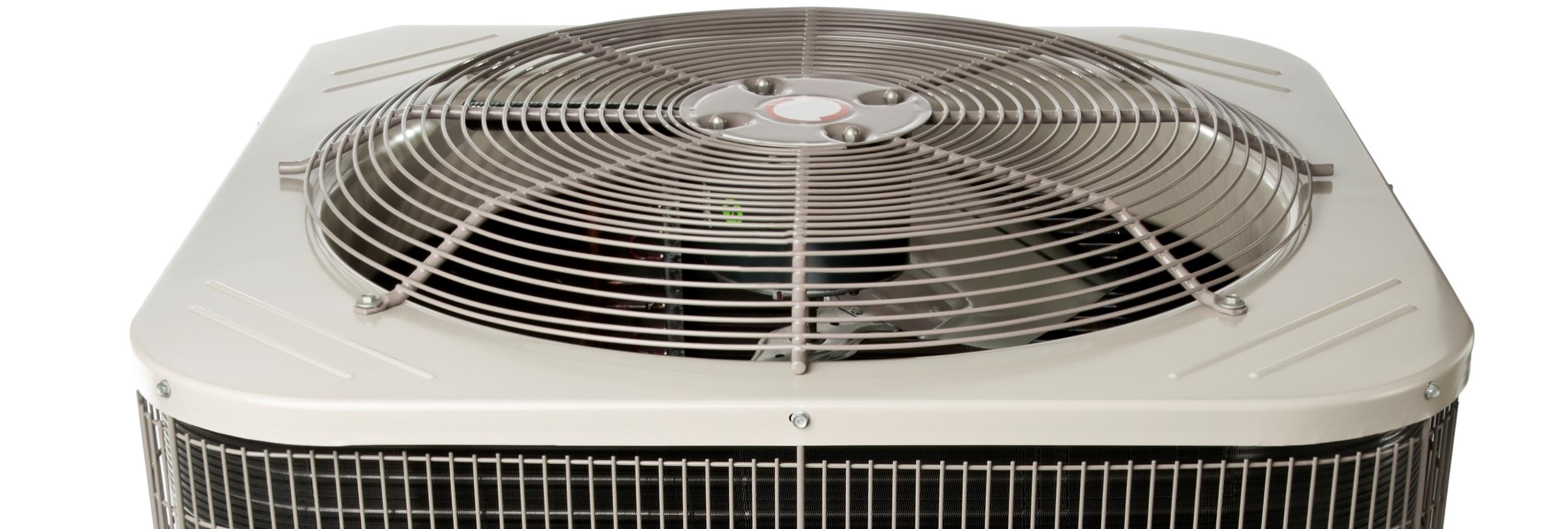
HVAC unit against a white background.

Summer without air conditioning can be downright miserable in the Fairfax area. If your air conditioner goes out and money is tight, you may be considering buying a used HVAC system to save on the cost of a new one. Today we’re going to answer some common questions about buying used HVAC equipment.

1. What Do You Know About the Equipment?

When you buy a new HVAC system, you generally focus on buying a good brand. You don’t have to worry too much about the individual unit you’re buying. Since it’s new, it’s unlikely to have developed any problems. If you find that there’s a manufacturer’s defect, that’s typically covered by warranty. You can be pretty confident you’re getting a machine that will work well for the foreseeable future.

When you buy used, you don’t have that assurance. You have to learn what you can about the equipment’s history. If you’re buying a barely used system from a reputable dealer, you may be getting a good deal. If you’re buying it from a homeowner, you need to ask yourself why he’s selling it in the first place. Does it even work? Did he maintain it? How often has it needed repairs before now? If you can’t be confident that the equipment is in as good shape as the seller says, you’re taking a huge chance by buying it.

2. Is There Any Kind of Warranty?

New equipment typically comes with a manufacturer’s warranty. The coverage of the warranty varies based on the manufacturer, but major brands typically offer a 10-year limited warranty.

While you can transfer many warranties if you sell your home, you can’t transfer them if you remove your HVAC system from the property where it was originally installed.

3. Are You Buying the Right Equipment For Your Home?

Correct air conditioner sizing is vital for good performance. When your A/C is the wrong size, you either waste energy with a system struggling to keep up, or you end up with moisture build-up from a system cycling off too frequently. If you don’t know how to calculate the correct size of the HVAC system you need, you run the risk of buying equipment that causes more problems than solves.

4. Who Will Install Your Equipment?

Professional HVAC installers are often reluctant to install any system that they can’t guarantee will work. If an installer puts in a used system and it doesn’t work, there’s no way of telling if the fault was with the equipment or the installation.

That leaves you with general contractors — or your neighbor’s cousin — who may or may not know much about air conditioner installation. Since one of the biggest causes of A/C malfunction is improper installation, you’re taking a big risk.

5. What If I Want New Equipment But I’m Not Made of Money?

There’s no doubt new HVAC equipment is a big investment. However, the benefits of having a new system with a full life ahead of it can’t be ignored. New systems tend to be more energy-efficient, so you save money on your energy bills. The security of professional installation and warranties are important factors to balance against the lower cost of used equipment.

Related Post

What Percentage Should You Mark Up Your Material for Doing HVAC WorkWhat Percentage Should You Mark Up Your Material for Doing HVAC Work

HVAC companies that service residential and commercial heating and air systems have an important job — no one likes to be hot in the summer and cold in the winter. Even though people need your services, they don’t want to pay an exorbitant amount to get their HVAC systems repaired or replaced. At the same time, you need to make enough money to pay your staff and your bills.

Break-Even Point

  1. Before you decide on how much to mark up your materials, know how much you need to make on the job to break even. Add up all your bills and divide that by the number of jobs your staff typically complete in a month. Calculate the number of hours the job should take, how much your staff person makes per hour — including costs such as health insurance and workers’ compensation — how much your charge per hour and the cost of the materials. If you need $50 per hour to cover all your staff costs and you charge $100 per hour for labor, that’s $50 toward your break-even point. If you need a profit of $100 per job to keep yourself in business, mark up the materials accordingly so they make up the other $50.

Markup vs. Margin

  1. Markup and your profit margin are calculated differently. The amount you mark up your materials doesn’t equal your profit margin percentage. Understand the difference so you can more accurately set your markups to make the profit you’re expecting. For a part that you paid $100, marking it up to $150 gives you a 50 percent markup: multiply 100 by 0.50 to get a $50 markup. To get your margin, divide the markup — in this case $50 — by your cost, $100. You get 0.33, or 33 percent. In this example, a 50-percent markup equals a 33 percent profit margin.

Parts Markup

  1. A standard markup in a non-retail business is 100 percent, meaning you charge the customer twice what you spent on the part or material. This requires accurate bookkeeping and estimating skills because prices change constantly. Know what you spent on each part before you can mark it up correctly. Your overall cost for the job also includes a labor markup, charging more per hour for your technician’s time than you pay him. These two markups can work together to make your business profitable. When you mark up your materials by 100 percent, you typically mark up your labor less, such as 25 percent.

Overall Markup

  1. Instead of setting a percentage to mark up your materials, provide overall job estimates. Decide how much you need to make on each job and provide an estimate that increases the total by a percentage instead of breaking labor and materials into different pieces that need to be marked up. For example, if your actual labor cost, including insurance and commissions, is $400 and your materials are $300, your total cost to do the job is $700. Mark that up so you get a net profit of 30 percent by dividing $700 by 0.70, and you get an increase of $300, for a total customer cost of $1,000. Set your overall markup percentage based on your break-even point to ensure that the job makes enough to pay your bills and, hopefully, makes a profit for the company.

WHY WATER HEATERS ARE SO IMPORTANTWHY WATER HEATERS ARE SO IMPORTANT

Why water heaters are so important

Water heaters are essential to our wellbeing and daily living. Although we sometimes take them for granted, water heaters allow us to wash dishes with ease, or warm up in the shower after a cold day outside. They even affect our washing machines, and help maintain the integrity of our clothes with warm cycles. Without a water heater, we would resort to manually heating water, which would be a waste of energy, time, and effort, which is why these systems are so functional and important in your home.

As users, we tend to notice such systems only when something goes wrong and our day-to-day activities are interrupted. Although people often get routine plumbing maintenance checks, water heater checks remain forgotten. This can lead to dramatic (even dangerous) issues later, leading to expensive repair or replacement costs.

Let’s dive deeper into this topic, and why water heaters are so important in every household in Toronto.

TEMPERATURE REGULATION

Starting with the basics, heating systems allow us to toggle between hot and cold water usage. The temperature depends on the task at hand; typically, cleaning is done with lukewarm water, while showering or washing hands requires warmer water.

An efficient water heater moves quickly between hot and cold water, and doesn’t run out of hot water quickly. As soon as you start to notice your water taking longer to warm up, or your hot showers getting shorter, it is a sign that something is amiss with your heater and its output is starting to deteriorate. Another sign that your system isn’t working properly is if the pilot light does not turn on, which indicates that the water isn’t warming up internally.

WATER CONSERVATION

We all recognize the importance of conserving water. Good quality water heaters work quickly so that as soon as the tap is switched, you receive hot water. If you have to run the tap for a couple minutes before your water is heated, it’s a sign that your system is either of mediocre quality or that a repair is pending. Running water when not needed (even if it’s for a couple minutes) can really add up on your monthly water bill.

ENERGY CONSERVATION

Similarly, water wastage or inefficiency can significantly impact your energy consumption. Most systems use gas or electricity to heat water, and if your system is running for a long time without heating up, it utilizes more energy. Not only is this not great for the environment, but it also comes with higher utility bills. This can easily be avoided with the right model, and then routine maintenance and repairs if needed.

Here is when the kind of heater you have comes into play. For example, a tank water heater keeps your water stored at a constant temperature regardless of which temperature you require at the time. A tankless heater will not heat water unless you turn the hot water tap, so you can expect energy to be saved with this system.

TYPES OF WATER HEATERS

However, which system should you choose? It can be intimidating trying to decide between a tankless heater or tanked, and then considering the size and output level. Make sure to reach out to professionals who can recommend another system if your current water heater is not meeting your needs. We’ve been in the water heater business for a long time, and our experts believe that the benefits of a tank system greatly outweigh those of a tankless. Local professionals will give you accurate recommendations based on your usage, as well as other factors such as the local weather. As we experience low temperatures in the GTA, it is important to pick the right heater that can withstand issues such as pipes freezing or lines breaking.

MAINTENANCE AND REPLACEMENT

Often, water heater issues are a result of a lack of routine checks. In this case, maintenance by a professional will do the job. If the issue is more serious, a repair can restore the system back to new. We strongly recommend not attempting a DIY fix or hack to your water heater; often, this can create new, more dangerous issues. Lack of professional knowledge can lead to short circuits, line breaks, and even personal harm through burns by sudden spurts of extremely hot water.

During remodelling or renovating your space, it may be a good time to consider a replacement. If you’re unsure about what to do, here are some important questions to think about when it comes to repairing or replacing your heating system:

  1. How often do you need to do maintenance checks? This is directly dependent on your chosen model and its efficiency. Doing a quick maintenance check every time you do your plumbing maintenance should keep your system happy and healthy for a long time.
  2. How often are you doing repairs? If you need to repair your system frequently, it is an indication that it isn’t working for you. Perhaps the usage is too high for your particular model, or maybe the style of the tank isn’t providing the best results. A great system will allow your water heater to run smoothly and efficiently without requiring repairs often.
  3. How old is your system? If you have an older system, chances are that you have outgrown your water heater! If you’re planning a remodel or renovation, consider opting for a new, better quality model that will ensure you don’t face hassles with your system. Referring to professionals here is important, as they can provide consultations that are tailored to your needs.

Being vigilant about your system and treating it often is key in avoiding larger, more dramatic problems later. We realize how important hot water is, and how it impacts so many of our daily activities. Feel free to reach out for a consultation, or if things get really bad, we offer emergency services for a quick fix as well.

THE IMPORTANCE OF VENTILATION IN THE KITCHENTHE IMPORTANCE OF VENTILATION IN THE KITCHEN

Nobody likes oven-like, stuffy and smelly kitchen, especially when you spend most of your time in the kitchen. Ventilation in the kitchen is often overlooked by the majority of kitchen users, but the truth is that the ventilation is just as important as the cleanliness.

It is important to keep in mind that a good ventilation system will improve the performance as well as the health of kitchen staffs. A well-ventilated kitchen could greatly help in controlling kitchen temperature and air quality.

The following are some reasons for equipping the kitchen with a proper ventilation system:

Control kitchen temperature and enhance air quality

The kitchen can get hot and grimy easily because cooking and preparing food generates heat, smoke, grease and odours. Installing a functional ventilation system is the easiest way to control kitchen temperature and improve the air quality. It works by expelling the hot air from your kitchen and creating a constant circulation of air within your kitchen. The elimination of impurities such as heat, smoke and fumes can greatly improve air quality for a pleasant and more comfortable kitchen environment.

Reduce energy loss

Without proper ventilation system in your kitchen, having fans alone might be ineffective in removing hot and contaminated air out from the kitchen. No matter how fast the fan blades spin, air impurities will remain stagnant, not to mention that the resulting energy consumption would be just as high. With some sort of ventilation system, cool air would be removed together with the smoke and hot air, causing the heating, ventilation, and air conditioning (HVAC) system to regenerate cool air to maintain optimal temperature. Thus, a proper ventilation system can help reduce energy loss and at the same time effectively improve air circulation of the entire kitchen.

Eliminate odours

Insufficient kitchen ventilation is the main culprit for pesky cooking smells. Unfortunately, no matter how little or heavily you cook, awful cooking odours will still linger around your kitchen. Therefore, a kitchen ventilation system can help you combat such smells. It filters the air from the kitchen and ensures regular air flow into the kitchen. An optimal air flow rate helps to prevent unpleasant odours from taking over your house or restaurant. Hence, all types of kitchen should have a ventilation system to prevent pungent cooking smells.

Avoid contamination of exhaust systems

Regular maintenance of kitchen ventilation system is a big must. The ducts, hoods and fans of the ventilation systems can be easily contaminated by the smoke, steam and grease residue that results from cooking. If you leave the exhaust system unclean, it can lead to unwanted damage. So, the exhaust system must be inspected regularly and you should always keep the system clean at all times. Besides, a well-designed kitchen ventilation that features a filtration membrane can effectively help to reduce the amount of residues trapped on the exhaust system.

In short, having proper kitchen ventilation can greatly help in controlling the temperature and air quality, reducing energy loss, eliminating odours and avoiding contamination.