
Ottos HVAC Blog 10 SIGNS IT’S TIME TO REPLACE YOUR HVAC SYSTEM

10 SIGNS IT’S TIME TO REPLACE YOUR HVAC SYSTEM

Clock on red background

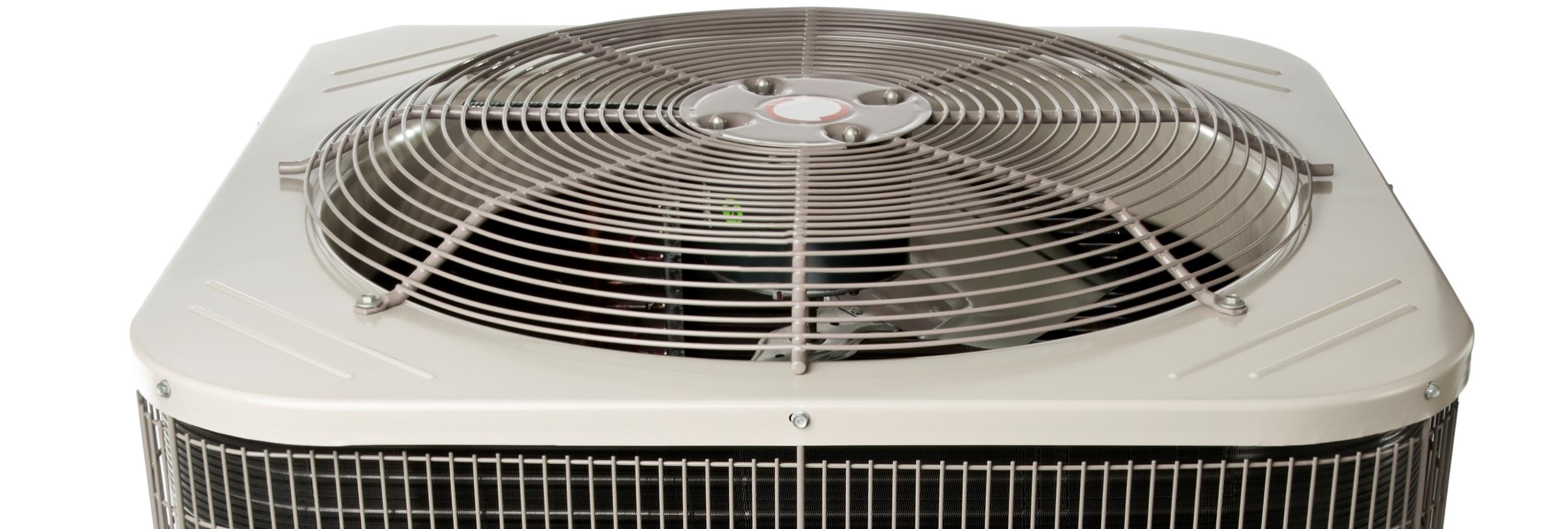
Many homeowners across Hampton Roads wrestle with deciding the right time to replace their heating and cooling systems. Here are 10 indicators that point to the fact that your HVAC system is ready for an overhaul. In most cases, you will find investing in a new, energy-efficient system, will save you money in the end. With a new heating and cooling system, you should not have unexpected repair bills nor increased utility costs. If you find yourself checking yes to these ten items, then it’s time for a new HVAC system.

1. HEATING & COOLING SYSTEM UNIT IS 10 YEARS + OLD

If your heating and cooling system is older than ten years of age, then chances are, it utilizes freon (or R-22) coolant. Owing to its harm to the environment, the manufacturing of R-22 has been retired across the globe. There are options to convert the coolant chemical to a safer agent. However, you should weigh the costs of this repair in addition to others on the horizon of an aging system. If your HVAC system is 10 years or older, you may be saying, “it’s time.”

2. BLOWING WARM AIR OR NOT BLOWING COOL AIR

When the temperatures warm up from Virginia Beach to Williamsburg homeowners will be clicking on their air conditioners. Your heating and cooling system has one purpose in life – to keep your home comfortable. Cool in the hot summer months and warm in the cold winter months. If you run your air conditioner and find that warm air or no cool air is blowing out, then you know you have a problem. Your HVAC system may have an issue with the compressor. Another reason could be an issue with refrigerant. Refrigerant may be leaking or low. Depending on the age of your HVAC system, the refrigerant cost may be more expensive than investing in a new cost-efficient system especially if your system uses the now-retired R-22 coolant.

3. POOR OR WEAK AIRFLOW

If you turn your system’s air conditioner on for the first time this spring and notice that the airflow from the AC return vents is barely pushing out cool air, then your system may have a problem. The issue could be as small as a clogged air filter (air filters require regular replacements). Lack of airflow could be an indicator of a broken motor, blower fan, or an even more serious problem. The bottom line, if your HVAC is not performing at its optimum level then greater energy bills are on their way. A cooling system running harder than it should to meet average output will be more taxing on the unit (on a track for greater repair bills) and will cost more in overexerted utility bills.

Woman on couch sweating

4. LOUD OR UNUSUAL NOISES

It is normal for a heating and cooling unit to make low-level sounds as it starts up and shuts down. However, if you are hearing uncommon noises – loud bangs and thuds, grinding, grating, and whistling – then your HVAC system is not well. If your system makes a buzzing or rattling sound, your heating and cooling system may have a loose part. No matter how you describe the noise, if it is uncommon to your system – then it requires attention. Call in a Smith & Keene expert technician to give your system an evaluation to determine the extent of the repair required.

5. HUMIDITY IN THE HOME

An air conditioning system should be equipped to keep moisture levels under control. If you notice that the inside of your home is just as humid as the weather outdoors, then your system needs a recalibration. HVAC systems should naturally be pulling humidity out of your home. If they are not doing this job, then other issues could be on the horizon.

6. FOUL ODORS

If you notice foul smells coming from your HVAC system not only is it annoying, it could be an indicator of a greater problem with your unit. Musty smells from your air conditioner vents could be an indicator of mold or mildew growing in the ventilation ductwork. A professional duct-cleaning could remove the microbial causing the odor. Worse odors, such as burning metal or melting plastic, are signs of a serious HVAC malfunction. These smells could indicate burned-out wire installation or motor. Turn your AC unit off immediately and call for a professional to evaluate the extent of repair required.

7. LEAKS

While minor condensation around your cooling system is expected, heavy drainage or leaks are signals of an issue with your HVAC. A drainage tube is the element of your HVAC that draws condensation away from your cooling system and outside of your home. If the condensation drain is clogged, then your system’s condensation drip pan may overflow causing water damage to ceilings or walls (depending on the placement of your AC system). Spotting a leak could also indicate that there is an issue with your refrigerant. Refrigerants are the chemicals used to maintain that your system does not overheat. It also keeps the air in your home cool. If the refrigerant is leaking in your system, then your system will not have sufficient coolant, and overheating could occur.

8. FREQUENT OR SHORT CYCLING

It is normal for an HVAC system to flip on or off in keeping your home at a comfortable temperature. However, it is not normal for air conditioners to short-cycle. Short-cycling is when your HVAC turns off before a cycle is completed. While one cause of short-cycling could be that your HVAC is too large for your home, another cause will lead you down the road of repairs. Short cycling is an indicator that your system is running harder than it should because of an issue. Whether it is a simple clogged air filter, or refill on your refrigerant, or it could be that your HVAC compressor is failing. Regardless of the cause, short cycling is a reason to call in a heating and cooling expert.

9. HIGH OR RISING ENERGY BILLS

If your utility bill for your HVAC suddenly spikes and is not in line with the temperatures outside, it could be an indicator that your system is working harder than it should. A heating and cooling system that is overworked means it is not running efficiently. The less efficient your HVAC system, the higher the utility bill. Additionally, if your cooling system is constantly running overtime then more repairs could be in the near future. Take steps to have your system evaluated by a professional to determine the cause of your system running above its means. If your system requires hefty repairs you may be saying “it’s time” to invest in a new, more energy-efficient system to lower utility bills.

Man reading bill

10. FREQUENT REPAIR BILLS

Every family has a tipping point for major repair bills. Whether it is a vehicle, a major appliance, or your heating and cooling system, there comes a time when the cost of a repair outweighs the investment of a replacement. If you are frequently sinking money repairing an aged HVAC unit, then a new more energy-efficient system could be your best bet. If it’s time for a new unit for your home’s HVAC, contact the experts at Smith & Keene to evaluate your out-of-date system and guide you in the most efficient heating and cooling system for your home.

CALL THE EXPERTS

If your home’s HVAC has one or more of these indicators, then chances are a new system is in your future. Be proactive! Don’t wait for mounting repair bills or until your unit completely breaks. Contact us to schedule one of our expert HVAC technicians to evaluate your existing cooling unit. If repairing your system is the right route, our team can handle it. If it’s time to get a new unit, our team is specially trained to guide you in selecting the ideal HVAC unit for your home. Don’t be afraid to say “It’s Time” and invest in a new heating and cooling system for your family.

Related Post

WHAT IS HVAC AND HOW IS IT DIFFERENT FROM AIR CONDITIONING?WHAT IS HVAC AND HOW IS IT DIFFERENT FROM AIR CONDITIONING?

There was a time when “HVAC” really was a term thrown about only by industry professionals and those wealthy enough to pay for it. Now, however, the entire industry has opened up. Google is littered with “what is HVAC” searches.

It’s become an almost generic term for air conditioning, used synonymously by people in all environments. But what does HVAC mean, exactly? How does it factor into your home or business, will it be heating or cooling? And what, if anything, is the difference between it and air conditioning?

These are the important questions, as we move into a world of better and better air control systems for spaces of all shapes and sizes. Because, ultimately, even with dozens of options to choose from, the only way to make a truly informed decision is to be, well, truly informed.

So join us, as we define HVAC, define air conditioning, and break down the differences between these two concepts.


WHAT IS HVAC?

Let’s start right off with an important question: “What does HVAC stand for?”. Short for heating, ventilation, and air conditioning, HVAC is responsible for heating and cooling a building. It’s also a source of proper ventilation, allowing for moisture to escape.

HVAC units can take on many shapes and sizes, all offering different benefits depending on their design and the spaces they’re being used in. Units may include any combination of the following:

  • Boilers
  • Air conditioning units
  • Ducts and moisture vents

Not all HVAC units are air conditioning units, even though AC units are included under the HVAC umbrella. As outlined above, what’s important to understand is that it’s actually a larger term. Think of it as an umbrella term that applies to all sorts of interrelated air control systems.


A CLOSER LOOK: HOW DOES YOUR HVAC WORK?

There are instances where the HVAC components may operate independently of each other. What’s more common, however, is for each component to work alongside the others. These so-called “combined systems” include both central heating and AC systems.

But make no mistake: your HVAC system is more than just a convenient way to warm up or cooling the space you live or work in. It’s a way to fully transform your indoor air quality and create a comfortable environment for everyone inside.

HVAC systems are available in several different variations. However, even with that said, at their core, they’re all based on the same essential build concepts. And it starts outside, not inside.

Fresh air is sourced and brought in from the outside environment by way of a process called “ventilation”. This can be carried out in one of two ways.


NATURAL VENTILATION

Ventilating your space naturally is done without specialized equipment, construction, or add-ons. We see this present in most homes, actually, in the form of any entry and exit points into the building. When the natural air outside moves through your windows, doors, and vents of its own accord, that’s natural ventilation.

Where is this most useful? Natural air exchanges like this are important in replenishing your oxygen levels, for starters. It’s also useful in removing odours and excess moisture from your home, as well as filtering out carbon dioxide.


MECHANICAL VENTILATION

Next, we have mechanical ventilation. This is a system that uses mechanical systems to transport air both into and out of the building. Old-fashioned architecture made it so most buildings had ready access to natural ventilation. Most homes, businesses, and official buildings made use of doors and windows to bring natural air from the outdoors, indoors.

Modern architecture is different, however. Contemporary builders opt for creating much more tightly-sealed homes, in general. This is a design philosophy that makes mechanical ventilation all the more important in households with HVAC systems.

Air enters the building using a specially designed air inlet unit, where it is immediately put to work. Air enters via the filter and is routed to different areas where it will be most needed. Specifically, it will be used in removing dust and dirt, allergens, and various other particles. This same air is used both in heating and cooling processes, and also works against excess humidity in the air.

Finally, once the air has been filtered and brought up or down to the appropriate temperature, it is headed home. In the case of a central system, this movement takes place via a network of ducts, allowing the air to travel wherever it is needed.


WHAT IS AIR CONDITIONING?

An air conditioner or AC system is specifically designed to cool or heat the air. In some circles, a contractor may call any unit that controls the air, whether hot or cold, an air conditioner.

For our purposes, however, and to keep the process as uncomplicated as possible, we won’t be using this convention. We’ll break it down like this: a system designed to condition the air is an air conditioner. Any system that works to cool or heat up the air while pushing out moisture via air vents would be referred to, specifically, as an HVAC unit.

We need to be careful here, most if not all AC units heat as well as cool these days, they refer to this as a “heat pump” which in essence is reversing the refrigeration cycle to provide heat, more and more these days buildings are dispensing with traditional “wet” systems as air conditioning systems have become more reliable and more importantly very efficient against fossil fuels.


A CLOSER LOOK

There are different kinds of air conditioning and HVAC systems. Let’s take a closer look at some of the options available;

Window Unit

A window air conditioner or heater is a small unit that is installed in and sits on the inside of a window sill. These AC units are usually smaller but actually offer a pretty powerful output. In spite of this, however, they are best used in small spaces for maximum efficacy. Studio apartments and small rooms work best, in this regard.

One big benefit of window units is their price. For the budget-conscious, this is one of the cheapest cooling options out there, especially for the quality of the product. Expect to pay only a few hundred pounds at a time, both for the unit itself and for installation.

Central Air (Air Handling Unit, AHU)

Central air conditioners are commonplace for cooling and heating. They’re especially useful in large spaces, where the interconnecting air ducts guide and release air to the rooms where it is needed.

The system itself will include both outdoor and indoor parts. Because of the size of the installation, these tend to be lifelong investments, put into buildings that owners own for many years.

They also involve big investment, initially. The system itself, however, is one of the most effective and has been known to last up to 20 years or more under the right circumstances.

The Mini Split System

The mini-split system is quite similar in design to central air. The big difference is the fact that the ductwork is largely removed and in its place refrigeration pipework is installed.

One of the biggest draws when it comes to ductless systems such as these is in the reduced cost of operation.

The system is more aesthetically pleasing than some other options, since there is no need to install complicated ducts.

And Now You Know…

When we try to define HVAC, air conditioning, and the differences between them, we immediately run into a problem. The idea of “what is HVAC” and “which one is air conditioning” has a simple answer: there is no real difference. Air conditioning is a subsection of HVAC, with units focusing more on moving air through a space.

Top Strategies for Choosing the Right Marketing Company in CharlotteTop Strategies for Choosing the Right Marketing Company in Charlotte

Understanding the Importance of a Local Marketing Company

In today’s digital age, businesses need a robust marketing strategy to succeed. For companies in Charlotte, finding the right marketing company in Charlotte can be a game changer. A local agency understands the market dynamics, customer preferences, and unique trends that can significantly impact campaign success.

Why Choose a Marketing Company in Charlotte?

When you partner with a marketing company in Charlotte, you benefit from their knowledge of the local landscape. They can craft marketing strategies tailored specifically for your audience, ensuring that your message resonates with potential customers. From SEO to social media marketing, Charlotte-based agencies have the expertise to implement solutions that work.

Local Expertise

A marketing company that operates in Charlotte knows what appeals to the local demographic. They can provide insights into local trends, preferences, and community events, allowing your business to connect with consumers on a deeper level. This proximity often leads to more effective campaigns compared to firms that do not have a local presence.

Holistic Marketing Strategies

Another advantage of choosing a local marketing company is their ability to offer comprehensive strategies. These companies understand that today’s marketing landscape demands an integrated approach. From digital marketing techniques like SEO and pay-per-click advertising to traditional methods such as print marketing, a well-rounded strategy increases the chances of reaching broader audiences.

Key Services Offered by Charlotte Marketing Companies

Here are some essential services that a typical marketing company in Charlotte might provide:

Search Engine Optimization (SEO)

SEO is crucial for any business’s online visibility. A specialized Charlotte SEO and marketing company in Charlotte can help improve your website’s ranking on search engines, driving organic traffic to your site.

Social Media Management

Social media is a powerful tool for engaging customers. A local agency will know which platforms resonate with your target audience and can create content that stimulates interaction and builds brand loyalty.

Content Marketing

Content is king in the digital marketing world. A marketing company can help you craft valuable, relevant content that not only informs your audience but also fosters trust and credibility in your brand.

How to Choose the Best Marketing Company?

When choosing a marketing company in Charlotte, consider the following tips:

Evaluate Their Portfolio

A reputable agency should have a robust portfolio showcasing previous work and results. Look for case studies that demonstrate their marketing successes, especially in industries similar to yours.

Check Client Testimonials

Reading reviews and testimonials from other clients can provide insight into the agency’s reliability and effectiveness. Reach out to former clients if possible to ask about their experiences.

Discuss Your Needs

Before committing, have a conversation with potential agencies about your specific needs and goals. This dialogue will help you assess whether they understand your vision and can tailor their services to meet your expectations.

Conclusion

Finding the right marketing company in Charlotte can significantly influence your business’s growth. By leveraging local expertise and a comprehensive approach, these agencies can help you build a strong brand presence and connect with your audience effectively. Don’t hesitate to take your time evaluating choices; ensuring that the marketing partner aligns with your business goals is essential for long-term success.

Five Reasons Why HVAC Maintenance Is ImportantFive Reasons Why HVAC Maintenance Is Important

1. Improve Air Quality

Normally, you probably have a few windows open in your house to get some fresh air in. But once it gets cold, you probably shut yourself in; you’ll have to deal with the air being a little staler than you’re used to.

Since you’re breathing more circulated air, maintenance is essential. This ensures you have clear and working air filters so you’re not breathing in old dust and other allergens.

2. Catch and Fix Small Problems

Whether you use your HVAC system often or rarely, it’s bound to run into some issues due to either wear and tear or infrequent usage. If you get maintenance done regularly, the HVAC experts can catch any small problems and fix them before they grow into larger and pricier issues.

Maintenance can even prevent problems from forming in the first place!

3. Get the Most out of Your HVAC Unit

Like we mentioned above, if you have an HVAC professional regularly checking up on your heating and AC, they’ll spot issues while they’re still small. This means less wear and tear on your HVAC system. As a result, it’ll last for longer than if you’d foregone maintenance.

4. Save on Utility Bills

When winter hits, you can count on running your HVAC unit pretty much constantly. That is probably already costly; do you really want to be paying more than necessary?


Without maintenance, your HVAC system might run inefficiently, which can drive up your utility bills. Do yourself a favor and pony up the cash for some HVAC maintenance before the temperatures drop. Your bank account will thank you later.

5. Reduce the Chance of Emergency Repairs

You never fully appreciate your HVAC unit until it’s completely out of commission. Sure, it may be operable now, but do you really want to chance it in the dead of winter, especially if the last time you got maintenance was…never?


Getting your HVAC system a clean bill of health can give you peace of mind while you and your family sit nice and cozy in your home, all winter long.

But don’t forget to keep getting maintenance done! It’ll be just as important when the summer sun comes out to play and you want to escape indoors!

HVAC Maintenance Is Important—Always!

Now that you know how HVAC maintenance is important, what are you waiting for? Make sure your HVAC system is in good working condition, especially before the cold weather really settles in.