Why HVAC is importantWhy HVAC is important

When homeowners think of HVAC systems and the HVAC industry, they are likely to think of heating and cooling first. Heating and cooling provide immediate and tangible comfort and are the most talked about components of an HVAC system.

What Does V Stand For?

The “V” in HVAC is for ventilation. It is a major, and perhaps the most important, part in all HVAC systems. But first, let’s talk about the comfort in HVAC.

Comfort

Why HVAC is important will differ in each of its applications, but the goal for most residential and commercial HVAC customers is comfort, especially in parts of the country with extreme weather. Offers near-perfect weather year-round with only a few months out of the year seeing extreme heat and cold. Because the seasons offer mostly bearable, if not great, weather, heating, and cooling are not always a necessity, but are always welcome respite during the hot summer days and cool winter nights, especially in the inland areas.

There are many great options for homeowners when choosing a new heating and cooling system. Whether you’re investing in an HVAC solution for a larger home, commercial building, small condo unit, craftsman style home without ducting solutions, or any other manner of residential and commercial space, an HVAC installation can produce massive benefits when it comes to temperature control and energy efficiency.

Traditional Split Systems

For most residential and some commercial spaces, a traditional split system is the best option. They can be installed in ready-made spaces or replace outdated inefficient systems.

A split system refers to a heating and cooling solution that has an outdoor condenser for air conditioning and an indoor air handler and furnace, all working together providing relief from the summer heat and warm comfort in the winter months. While homes and businesses can have a forced air heating system alone, air conditioning relies on the indoor furnace component.

The outdoor condenser houses the compressor, fan motor and refrigerant components. The compressor and fan motor work to expel the heated air, while the refrigerant works with the indoor air handler to pass cool air into the home.

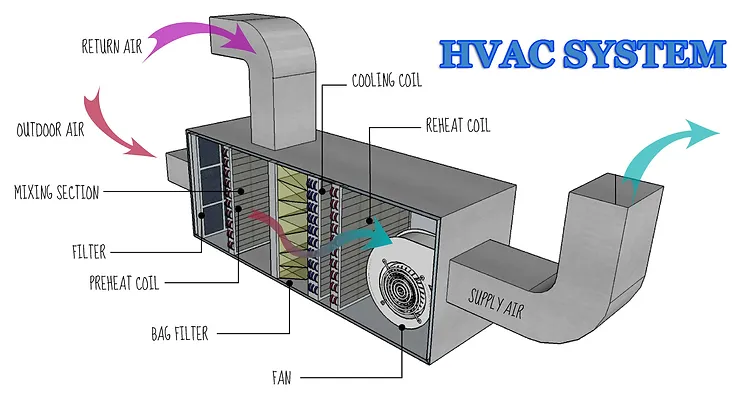
The indoor air handler or furnace contains the evaporator, return air register, and indoor fan motor.

A common misconception about air conditioning is that it cools the air. In fact, it simply removes the heated air and humidity, redistributing the air that passes over the refrigerated coil back into the home. Air conditioning was a “happy accident.” Invented by Willis Carrier in 1902, what we know of as modern air conditioning was in fact designed to remove moisture in the air of a New York printing company. The printers were losing money because of the hot humid New York summers, as it was ruining printing projects with all of the humidity. The byproduct of Willis Carrier’s invention was cool air.

Most homeowners begin looking to replace their traditional split systems when they are no longer cooling, have a refrigerant leak, or to upgrade to a higher efficiency system. With a well-maintained HVAC unit, it should last between 15-20 years.

Ductless Mini-Split

Ductless mini-splits work much like a traditional split system, just without the ductwork. They are the ideal choices for spaces where ducting does not make sense. Ductless mini-splits are also gaining popularity in traditional settings because of their efficiency and zone control.

The components that make up a ductless mini-split are much like traditional systems. There are indoor air handlers and an outdoor condenser. The difference lies in the absence of ducting, a much slimmer condenser, and air handlers that can be placed in up to 15 different locations. They are typically mounted to the walls or recessed in the ceilings.

The indoor air handlers are unique in that they can control the temperature in each space they are installed, making it easy to heat or cool desired and used spaces, while leaving unused spaces off for efficiency. They are also programmable to run automatically and are the most efficient way of heating and cooling large and small spaces when installed and programmed correctly.

While traditional systems are becoming more efficient at controlling temperature and providing air flow, they still cool all the spaces with venting regardless of use. Homeowners with larger spaces or multiple stories often choose to install multi-zone traditional systems to gain a bit more control over their use.

There are many other options for residential and business spaces, and we cover them in this article (types of AC).

Ventilation

Ventilation is perhaps the most important component in the HVAC equation, yet the least talked about.

Proper ventilation is required for heating and cooling comfort and improved indoor air quality. If a home or commercial building has poor ventilation, people may experience foul odors, stale air, heightened allergies, and in worst-case scenarios, major health issues.

How is Ventilation Achieved?

In residential applications, ventilation occurs naturally through the homes’ build. In most older homes, and/or homes built prior to 2000, there are natural cracks, crevices, ducts, open seals, etc. that allow fresh air into the home, a way of the home “breathing.” Forced air systems and air conditioning units (traditional ducted systems) circulate the air through the ducting as they heat and cool the home.

The downside to natural ventilation is that the heated or conditioned air also escapes through these cracks. This can cause many inefficiencies in a home or commercial building. Homeowners can recoup some of this lost energy through insulation and ensuring that the ductwork is properly installed with no kinks, bends, holes, or leaking seals. Hiring a professional and experienced HVAC company will help you save on HVAC installation and energy bills. Routine maintenance is also recommended for the efficiency of any HVAC system. Preventative maintenance can help keep a system running at its optimal level and maintain the manufacturer’s warranties.

In commercial spaces, ventilation is even more important and they require at least 20 percent fresh air. This is achieved through a fresh air vent system, known as mechanical ventilation.

Many newer homes and buildings are being built with energy efficiency and energy savings in mind. They are essentially sealed up tight, making natural ventilation impossible. These homes require mechanical ventilation and a fresh air intake vent. This also provides some of the best HVAC and energy efficiency in the home or commercial building with no lost air.

Why HVAC Maintenance is so Important

Heating, Ventilation, and Air Conditioning maintenance is integral to the life of the system as well as the homeowner’s pocketbook for peak efficiency, the manufacturers warranty and safety. Homeowners and business owners should hire a licensed HVAC contractor with experienced HVAC technicians once per season for each heating and cooling system. It is recommended that maintenance be performed in the spring prior to running the air conditioner, and in the fall prior to running the furnace.

Regular maintenance will keep the system clean from dirt and debris, ensure all of the mechanical parts are oiled and working properly, and ensure the safety of all the components, including proper ventilation. This will keep homes and businesses free of harmful VOCs (Volatile Organic Chemicals) in the air, helping seasonal allergy problems and improved health. During maintenance visits, the licensed HVAC contractor will also provide recommendations if more measures need to be taken for the best indoor air quality, such as UV lights or air purifiers.

Choosing the Right Contractor

When it comes to HVAC, it is imperative that home and business owners choose a contractor with HVAC equipment that understands all of the heating ventilation and cooling components of the system.
What is an HVAC contractor & what do they do?What is an HVAC contractor & what do they do?

f you live in a home with indoor heat and air conditioning, you know how important it is to keep the system working properly.

Without HVAC systems operating at peak efficiency, life can become extremely uncomfortable quickly.

That’s why hiring an HVAC contractor when your system begins acting up is so important. HVAC contractors have the training and experience to fix your HVAC system fast.

But what does an HVAC contractor do and what kind of services do they offer? How do you choose an HVAC contractor? Keep reading to find out.

What is an HVAC contractor?

An HVAC contractor is someone who specializes in heating, ventilation, and air conditioning (HVAC) systems. They are professionals who are licensed and insured to install, repair, and maintain HVAC systems in homes and businesses.

HVAC contractors can help homeowners maintain their HVAC systems so they run efficiently and cost-effectively year after year. They can also help homeowners plan for and install new HVAC systems when their current system stops working correctly or no longer meets their needs.

HVAC contractors are also responsible for making sure that all installed systems are properly maintained and operate safely. This includes making sure that all electrical work is up to code, that air ducts are properly sealed and filtered, and that gas lines are properly installed and capped.

What does an HVAC contractor do?

As we’ve said, HVAC contractors install, repair, and maintain HVAC systems. They can also provide HVAC maintenance and replacement services when systems break down and need to be repaired or replaced.

Regardless of the service they provide, the main goal of an HVAC contractor is to keep you and your family comfortable. If your system is running at peak efficiency, you can expect to save on energy costs and have a reduced carbon footprint.

When your HVAC system is not working properly, an HVAC contractor can help you get it back up and running as quickly as possible.

Here’s a look at the three main services that HVAC contractors provide:

1) HVAC maintenance services

Regular HVAC maintenance service can extend the life of your HVAC system, reduce your chances of needing expensive repairs, and save you money on energy bills.

A trained HVAC contractor can inspect your system and identify any issues that need to be addressed. They can also make sure that your system is in proper working order.

While you can perform some maintenance tasks on your own, HVAC contractors have the training and expertise that homeowners don’t have. They can do a more thorough inspection and address issues you may not have even realized existed.

Common HVAC maintenance services include:

  • Cleaning or replacing air filters. Air filters should be cleaned or replaced every month or as needed. Dirty filters can cause your HVAC system to work harder, resulting in higher energy bills. When filters are old, they can also pose a health risk to your family.
  • Flushing your cooling system. Flushing your cooling system removes dirt, sand, and other debris that accumulates in the pipes of your cooling system. Keeping your cooling system clean reduces your risk of needing maintenance or repairs. It can also help extend the life of your HVAC system.
  • Checking and maintaining electrical components. Electrical components such as circuit breakers and cooling fans are essential to keeping your HVAC system in proper working order. An HVAC contractor can make sure these components are working properly and that your system is protected from electrical issues.

2) HVAC installation services

HVAC contractors also can help install new systems in your home or business. HVAC contractors have the experience needed to plan the best system for your home, install it correctly, and ensure it is operating safely.

An HVAC contractor will work with you to choose a system that meets your needs and fits your budget. They can also help you navigate local building and zoning codes.

3) HVAC repair services

HVAC contractors can also provide repair services for your existing HVAC system.

If your system breaks down and needs to be fixed, you don’t want to wait. The sooner you get your system back up and running, the less discomfort you’ll have to deal with and possibly less money you’ll waste on energy bills.

Some HVAC repairs can be done quickly, while others may take longer. In some cases, it may be more cost-effective to replace your system than to have repairs done.

HVAC contractors can help you decide what is best for your situation. They can also help you navigate any homeowner’s insurance that you may have that could cover the cost of repairs.

4) HVAC replacement services

When your HVAC system breaks down beyond repair, it will need to be replaced. Some HVAC contractors also offer HVAC replacement services.

Before choosing a new system, an HVAC contractor will help you assess your current system and determine what size you need and what type of system would be best for your home.

They can also help you navigate the types of rebates and incentives that may be available to you when making your decision.

Some HVAC contractors may even provide financing for HVAC replacements so you can spread out the cost over time.

How to choose an HVAC contractor

The best place to start your search for an HVAC contractor is through friends and family. Ask them if they’ve had a contractor or company that they’ve had a good experience with in the past.

You can also search for an HVAC contractor online. Checking contractor search sites like Angi’s List or seeing Google’s top recommendations for contractors in your area is a quick way to build a shortlist of candidates.

Remember, not all contractors are created equal. Choose an HVAC contractor who has experience in your area and is knowledgeable about your type of HVAC system.

Before choosing an HVAC contractor, make sure they are licensed and insured if required by your state, city, or local area. You can typically check to see if contractors are licensed and insured in your area by visiting the website of your state’s government.

When you are interviewing contractors, make sure you ask the following questions:

  • How long have you been in business? A contractor who has been in business for many years is more likely to be experienced and knowledgeable than someone who has just started out.
  • Do you specialize in HVAC systems? An HVAC contractor who specializes in your type of system can help you make the best decision for your home.
  • Do you have experience installing the type of system I’m considering? An HVAC contractor with experience installing your system can help you make sure it’s installed correctly. A contractor with these attributes can help you choose the best system for your home, install it properly, and maintain it for years to come.

Choosing an HVAC contractor may seem like a daunting task, but it doesn’t have to be. Be sure to check out online reviews and talk to friends and family to narrow down your search.

Next, give the contractor or company a call to get an idea of their experience, pricing, and their projected timeline for getting the work done. You may even be able to get a free consultation or estimate.

Once you feel comfortable with a contractor, move forward with the project and give your HVAC system the love it deserves!

Five Steps for Providing Great Service to Your HVAC CustomersFive Steps for Providing Great Service to Your HVAC Customers

You already know that your team has the expertise to solve your customers’ air-conditioning and heating issues quickly and affordably, so how do you stand out from your HVAC competitors? The best way is to deliver an easy, friendly, professional experience so that customers want to call your company again and tell their friends and colleagues about you.

1. Create a Lasting Impression

Make a great first impression! Have a professional website that describes who you are and what your customers should expect from you. What are your company’s values? Do you offer a 24-hour service or guarantee all requests for same-day service? Tell your potential customers this and give them clear ways to reach you. Make your phone number easy to find or provide webchat services that allow a customer to reach out in whatever way they feel comfortable.

2. Schedule Service Requests Quickly and Efficiently

When customers contact your company, make sure they’re greeted by friendly voices who are prepared to schedule their service needs. Make sure your phone staff can provide the important information your customer needs so that they can make an informed decision to do business with you. If you use a call center or live answering service, outfit them with the tools to help your customers and make sure they can interface with your customer management database. This way your call center can have access to past service information, quote prices and then schedule jobs. Your callers want reassurance their service needs are being scheduled during the first call and if your customer has to wait around for someone to get back to them, they may find another provider during the wait.

3. Treat Customers with Respect and Compassion

Make sure your technicians delivering service to your customers are friendly, professional and respectful of your customers’ homes and businesses! Your customer is unlikely to call you back to fix a problem if their last impression was of your service technician leaving dirty footprints on the carpet or cigarette butts in the yard. Your technicians are providing a valuable service to people in need, but those customers have a lot of choices. Set an expectation that your service technicians treat your customers with gratitude and the utmost professionalism. This will help your customer remember you and make them feel comfortable inviting your team members into their homes again in the future.

4. Be Honest and Transparent with Customers

Deliver on your promises! Arrive on time. Provide accurate quotes that don’t hide charges. If anything threatens your ability to arrive at a predetermined time with a customer, be proactive and let them know so that they can determine whether they want to continue to wait. If the scope of work changes after a quote is provided, inform your customer immediately. Transparency with customers allows them to make informed decisions about how to move forward. Customers are happiest with providers who are honest and open with them.

5. Follow up to Measure Customer Satisfaction

Check in on your customers! After the service is complete, find a way to check in to make sure the customer’s issues are resolved and that they are satisfied with your service. If you want that customer to come back or to tell their neighbor to call you, you have to show them you care about them. Checking in is a great way to do that. There are many customer management tools on the market that can help automate these check-ins. Research some and find one that works best for your business.

These five simple considerations really can make a difference between gaining a customer for life or just being another service provider in a crowded market. Remember to make a great impression. Once your customer decides to reach out to you, make them happy they did, and be easy to do business with by having great people answer your phones. Guarantee that the technicians you’re sending in to your customers’ homes are professional and show your customers that they’re happy to be there. Deliver on your promises and be transparent when anything gets in the way of you meeting the expectations you set with your customer. Finally, check in on them after the service to make sure they got everything they need from you.

Remember that there are many tools to help you with all these items, including web design teams, great call centers and customer management tools. Be aware of what’s in your marketplace to help you stand out from your competitors. Almost all of them are inexpensive compared to lost customers and opportunities due to poor customer service.

THE IMPORTANCE OF VENTILATION IN THE KITCHENTHE IMPORTANCE OF VENTILATION IN THE KITCHEN

Nobody likes oven-like, stuffy and smelly kitchen, especially when you spend most of your time in the kitchen. Ventilation in the kitchen is often overlooked by the majority of kitchen users, but the truth is that the ventilation is just as important as the cleanliness.

It is important to keep in mind that a good ventilation system will improve the performance as well as the health of kitchen staffs. A well-ventilated kitchen could greatly help in controlling kitchen temperature and air quality.

The following are some reasons for equipping the kitchen with a proper ventilation system:

Control kitchen temperature and enhance air quality

The kitchen can get hot and grimy easily because cooking and preparing food generates heat, smoke, grease and odours. Installing a functional ventilation system is the easiest way to control kitchen temperature and improve the air quality. It works by expelling the hot air from your kitchen and creating a constant circulation of air within your kitchen. The elimination of impurities such as heat, smoke and fumes can greatly improve air quality for a pleasant and more comfortable kitchen environment.

Reduce energy loss

Without proper ventilation system in your kitchen, having fans alone might be ineffective in removing hot and contaminated air out from the kitchen. No matter how fast the fan blades spin, air impurities will remain stagnant, not to mention that the resulting energy consumption would be just as high. With some sort of ventilation system, cool air would be removed together with the smoke and hot air, causing the heating, ventilation, and air conditioning (HVAC) system to regenerate cool air to maintain optimal temperature. Thus, a proper ventilation system can help reduce energy loss and at the same time effectively improve air circulation of the entire kitchen.

Eliminate odours

Insufficient kitchen ventilation is the main culprit for pesky cooking smells. Unfortunately, no matter how little or heavily you cook, awful cooking odours will still linger around your kitchen. Therefore, a kitchen ventilation system can help you combat such smells. It filters the air from the kitchen and ensures regular air flow into the kitchen. An optimal air flow rate helps to prevent unpleasant odours from taking over your house or restaurant. Hence, all types of kitchen should have a ventilation system to prevent pungent cooking smells.

Avoid contamination of exhaust systems

Regular maintenance of kitchen ventilation system is a big must. The ducts, hoods and fans of the ventilation systems can be easily contaminated by the smoke, steam and grease residue that results from cooking. If you leave the exhaust system unclean, it can lead to unwanted damage. So, the exhaust system must be inspected regularly and you should always keep the system clean at all times. Besides, a well-designed kitchen ventilation that features a filtration membrane can effectively help to reduce the amount of residues trapped on the exhaust system.

In short, having proper kitchen ventilation can greatly help in controlling the temperature and air quality, reducing energy loss, eliminating odours and avoiding contamination.

Five Reasons Why HVAC Maintenance Is ImportantFive Reasons Why HVAC Maintenance Is Important

1. Improve Air Quality

Normally, you probably have a few windows open in your house to get some fresh air in. But once it gets cold, you probably shut yourself in; you’ll have to deal with the air being a little staler than you’re used to.

Since you’re breathing more circulated air, maintenance is essential. This ensures you have clear and working air filters so you’re not breathing in old dust and other allergens.

2. Catch and Fix Small Problems

Whether you use your HVAC system often or rarely, it’s bound to run into some issues due to either wear and tear or infrequent usage. If you get maintenance done regularly, the HVAC experts can catch any small problems and fix them before they grow into larger and pricier issues.

Maintenance can even prevent problems from forming in the first place!

3. Get the Most out of Your HVAC Unit

Like we mentioned above, if you have an HVAC professional regularly checking up on your heating and AC, they’ll spot issues while they’re still small. This means less wear and tear on your HVAC system. As a result, it’ll last for longer than if you’d foregone maintenance.

4. Save on Utility Bills

When winter hits, you can count on running your HVAC unit pretty much constantly. That is probably already costly; do you really want to be paying more than necessary?


Without maintenance, your HVAC system might run inefficiently, which can drive up your utility bills. Do yourself a favor and pony up the cash for some HVAC maintenance before the temperatures drop. Your bank account will thank you later.

5. Reduce the Chance of Emergency Repairs

You never fully appreciate your HVAC unit until it’s completely out of commission. Sure, it may be operable now, but do you really want to chance it in the dead of winter, especially if the last time you got maintenance was…never?


Getting your HVAC system a clean bill of health can give you peace of mind while you and your family sit nice and cozy in your home, all winter long.

But don’t forget to keep getting maintenance done! It’ll be just as important when the summer sun comes out to play and you want to escape indoors!

HVAC Maintenance Is Important—Always!

Now that you know how HVAC maintenance is important, what are you waiting for? Make sure your HVAC system is in good working condition, especially before the cold weather really settles in.

Benefits of Hiring a Professional HVAC ContractorBenefits of Hiring a Professional HVAC Contractor

Why Hire Expert HVAC Company

Hiring a skilled HVAC contractor has several advantages, whether you need a newly designed heating and cooling system or repairs and maintenance on your current one. Professionals have the knowledge and skills to ensure the property is safe and your system is working properly no matter what. They can repair, install, and maintain any HVAC unit that you have. That’s why, if you have problems with your air conditioner, make sure to contact the experts.

Here are the benefits that you might enjoy if you do so:

Complete the Task Properly

Professional HVAC technicians have years of expertise and are well-versed in the HVAC system’s ins and outs. They are capable of resolving any issue, no matter how complex. It’s because they are well-trained and equipped. Their experience and training can assist them in detecting other difficulties that you were unaware of, and they will work quickly to resolve them. An HVAC contractor can quickly install your system and inspect it thoroughly.

Increase System Longevity

Scheduling an HVAC repair now and then because your air conditioner isn’t operating is both costly and time-consuming. And the regular damages are a sign that your HVAC system isn’t going to last as long as it should. There would be no need for regular maintenance with a proper HVAC installation. Once your air conditioner is installed, you only have to arrange seasonal tune-ups and maintenance services. And it will last a long time.

Safe and Effective Service

Touching some electrical parts, fan blades, and other sharp metallic things are required when servicing your air conditioner. If you don’t have the proper training to perform this repair, you risk electrocution or cutting yourself. Worse, you could set fire to your home. An HVAC contractor is equipped and taught with safety precautions to prevent injuries. They also know which sections of your air conditioning system require special care.

4 Tips for Choosing an HVAC Contractor4 Tips for Choosing an HVAC Contractor

Your HVAC system, which comprises a combination of air conditioning and heating systems, is an essential part of your home. This is why you should not take the decision of choosing the right team of HVAC contractors lightly.


After all, you need one of the best HVAC companies that is knowledgeable enough about heating, ventilation, and air conditioning to be able to improve the energy efficiency of your home while ensuring that your HVAC system is always working at its best.


What Is an HVAC System?


HVAC stands for heating, ventilation, and air conditioning. It is used to regulate the temperature of the home and improve the quality of the air. A well-designed HVAC system will offer these benefits while preventing a significant increase in your utility bills.


Tips for Choosing a Contractor


Follow these tips to ensure that you’re choosing a reputable HVAC service provider.


1. Ensure That You’re Working with a Trained Air Conditioning Expert


One of the most important things to look for is expertise. HVAC systems are often complex, comprising a number of parts, such as the heat pump, air conditioner, and more.


It takes a knowledgeable HVAC technician to be able to properly install and maintain them. The first thing you need to check for is a license. Your HVAC contractor must be legally allowed to work on your air conditioning systems.


You’ll also need to look for experience. Check past projects to ensure that the HVAC contractors have a good track record and have the capacity, experience, and expertise to take on your project.


2. Check for Affordability


You should not have to pay a fortune for an AC unit installation, so make sure you’re requesting an estimate to learn more about the price you will be expected to pay for the company’s services. As with anything, sometimes the least expensive option is not the best option as price sometimes dictates quality. When comparing estimates, be sure to compare the full service and HVAC equipment being installed and not just the price.


3. Compile a List of Candidates


Never choose the first team of HVAC contractors you come across. Make sure you’re assessing a few HVAC technicians prior to making your choice. You can search the internet or request recommendations from friends and family members.


Once you have your list, you can get started checking which ones meet your criteria and can best meet your needs.


4. Ensure That You’re Working with a Professional


There’s nothing worse than hiring a team of HVAC contractors only to find that they are unprofessional, sloppy, or not what you expected. Be sure to talk to the team before hiring them to ensure that they are a good fit for you and can adequately meet your needs.


4 Reasons You Need Your Ventilation Systems Serviced4 Reasons You Need Your Ventilation Systems Serviced

Your ventilation system in your home is one of the key elements of your family’s health. The air in your home can be filled with contaminants like airborne spores and germs and can be prone to mold and mildew. Poorly ventilated homes are far more susceptible than those with air conditioning and ventilation systems.

For allergy and asthma sufferers, poor ventilation is a well-known trigger, and creates a very unhealthy environment, causing unnecessary illness. By reducing dampness in the air, by lowering condensation levels, and removing dust and pollen from the air, ventilation systems makes the air cleaner, and your family healthier.

Ventilation systems undoubtedly improve the quality of the air you breathe and can also save you a lot of money. One important thing to know about ventilation systems is that with regular use, comes the requirement to maintain it. Maintenance can include cleaning filters, and general servicing to clean and ensure the system is working to its full capacity. There are of course many other reasons you should service your ventilation system.

Here are 4 Reasons You Need Your Ventilation Systems Serviced:

Preventative maintenance

The thermostat that helps to monitor the temperatures of your home is a critical part of your heating, cooling and ventilation system, and without regular maintenance the thermostat can stop working at the capacity or stop working altogether. This can cause your home’s temperature to become out of balance, resulting in the loss of your preferred thermal comfort levels. Preventative maintenance will pick up any small thermostat issues early, allowing you to replace it before it is too late.

Dirty Filters

Regular maintenance includes the cleaning or replacement of dirty or faulty filters. Dirty filters mean air flow will be restricted and the air will not be cleaned as it should be. The only way to ensure the filters are doing the job they are designed for is through maintenance. Filters should be cleaned seasonally, and if you are in a dusty area, it might pay to purchase an extra set of filters to keep in clean storage to replace between seasonal servicing. Dirty filters also reduce the efficiency of the system, forcing the system to run harder and cost you more.

To Rectify Improper Installations or Imbalanced Dampers

Sometimes installation can be rushed or not correctly carried out for many reasons, however servicing your ventilation system allows the technician to find and repair any errors that were previously made upon installation or adjustments. Your ducting can often become unattached inside your roof or walls if it isn’t installed correctly, which can cost hundreds of dollars a year on air going inside your walls rather than where you need it to be.

Incorrectly balanced ducting can also lead to hot or cold spots in areas of the home and servicing the system can easily rectify this problem. Ducting balance can also be altered for the seasons. You house position has a big impact on how the heat is circulated through your home, and some parts are almost always hotter or colder than others naturally. Your service technician can alter the ducting and rebalance it to suit the seasons, to ensure your home is a consistent temperature throughout, all year round.

To Ensure It Runs at Optimum Capacity

For your system to run at its peak performance level, a service technician needs to be able to find and fix problems or faults. This enables your system to run at its best all year. Maintenance is a cost that you might be hesitant at paying for, however when you think about costs of maintenance versus costs of repairs, the money really is worth spending. Just like you service your car, you should service your ventilation system to prevent large costs when something breaks.

5 Benefits of Good Ventilation5 Benefits of Good Ventilation

Good ventilation may not seem all that important at first glance. When you get down to the heart and soul of it, though, the many benefits good ventilation has to offer, like the five listed below, should make it a priority in your home.

1) Improve Indoor Air Quality
The EPA suggests that indoor air quality in most homes is worse than the quality of the air outside. Unless measures are taken to improve ventilation, like installing a whole house fan, garage exhaust fan and attic fan, you may find yourself struggling with immediate health problems related to poor indoor air quality like irritation of the eyes, nose, and throat, headaches, fatigue, and dizziness, or long-term effects that include cancer, respiratory disease, and even heart disease.

2) Reduce Moisture
Good ventilation helps to draw moist air out of your home, releasing it outside. Moisture is introduced into the air in your home whenever you prepare meals, shower, wash dishes, or do laundry. Without adequate ventilation that moisture has no escape and becomes trapped in your home to generate mold and mildew problems that compromise the structure and beauty of your home in addition to the health of your family.

3) Temperature Control
Believe it or not, ventilation, properly venting stifling air out of your home, can go a long way toward keeping your home comfortable inside when the world heats up outside. Whole house fans, such as the QuietCool QC CL-3100 Whole House Fan, and attic fans, like the QuietCool Smart Attic Gable Fan, are excellent tools to assist with this as they help to remove the hot air from your home allowing cooler air to circulate better within your home.

4) Protect Respiratory Health
Toxins, allergens, bacteria, and moisture in the air in your home can lead to a wealth of unpleasant allergy symptoms, respiratory illnesses, and even asthma attacks. Good ventilation allows these things to escape your home, clearing the air inside so your family can breathe easier.

5) Improves the Smell of Your Home
There’s nothing quite like fresh air to make a room, or a home, smell clean. Good ventilation can help to remove many of the more unpleasant odors in your home, such as mold, mildew, tobacco smoke, cooking odors, and even pet smells.

The five benefits above are a small sample of the good that adequate ventilation can provide for your home. The key for improving indoor air quality and making your home a healthier place for your family and friends is to keep adequate ventilation in your home a priority.

What are the benefits of heating, ventilation and air conditioning (HVAC)?What are the benefits of heating, ventilation and air conditioning (HVAC)?

The three functions of heating, ventilation and air conditioning of HVAC are interrelated, and this purpose is to provide people with a comfortable temperature at reasonable cost of installation, operation and maintenance. The air conditioning function of HVAC, which can adjust the air pressure relationship between indoor and outdoor or between different rooms. In modern buildings, if it is a small building, the contractor will directly select the air conditioning system and equipment according to the needs. If it is a large building, it is necessary to select the air conditioning system through calculation and analysis, and have a professional installation agency to install it.

HVAC is the central air conditioner for households. The biggest feature of central air conditioner is that it can create a comfortable environment for people. However, the general split air conditioner for furniture can only solve the problem of heating and cooling, but it cannot solve the air treatment process. However, the emergence of HVAC has solved this problem for us. The steps of its air conditioning treatment are: advanced cooling treatment, and then filtering treatment, which can add several features, namely: the first is the addition of electronic dust collectors . It can capture very small dust, most of the captured dust is bacteria, germs, smoke or odors, etc., so that it can be filtered out; the second is to add a humidification device, which can make our room The humidity increases to 40% relative humidity, which makes us feel very comfortable.

The fundamental purpose of HVAC is to achieve temperature regulation and to achieve people’s control of temperature. In the early days, HVAC systems were designed using constant flow hydraulic systems. The temperature of the air is regulated through the end of the zone. This is a relatively simple, rough, decentralized adjustment, and no adjustment to the hydraulic system is required after the initial adjustment.

With the continuous improvement of people’s low level of environmental comfort, this simple system can no longer meet people’s needs, and people begin to use variable flow water conservancy systems and variable air volume systems. And later, the emergence of electric regulating valve has greatly improved the ability to adjust the ambient temperature, making people’s lives more comfortable.

HVAC (Heating, Ventilation and Air Conditioning) is a combined system of indoor and outdoor air circulation. It also helps to heat and cool buildings in winter or summer. But HVAC is more than just raising or lowering the temperature, here’s a summary of the benefits of HVAC

1) Improves air quality: The heating, ventilation and air conditioning (HVAC) system filters any dust, dirt or any other particles from the air before it flows into the house.

2) Save money and space: HVAC is a combined system, so it does not have to be installed separately, which saves a lot of space. While the system is a bit pricey at first, it can also run with solar panels installed. So, it saves money in the long run.

3) Maintains moisture and temperature: The HVAC system helps keep the moisture in the air at an optimal level at all times, so it doesn’t allow mold to grow anywhere, keeping the house clean. Also, it maintains temperature. Cool in summer and warm and comfortable in winter, making life more comfortable.

4) Long life: HVAC system can be used for a long time. Once properly installed, the device will last for years. There is a one-time fee and no additional equipment is required.