Ottos HVAC Blog 5 benefits to good ventilation in your home

5 benefits to good ventilation in your home

Having good ventilation in your home was a hot topic during the coronavirus pandemic. With many of us spending more time in our homes, improving airflow to prevent virus particles from accumulating in the air had never been more important.

Good ventilation, so ensuring you have good airflow throughout your home, is recommended long after the pandemic had ended. It is good practice for us all to air our homes out, whether that be opening windows, having extractor fans fitted in wet rooms or trickle vents in our windows.

Effective ventilation helps keep your home energy-efficient, safe, and healthy as it helps control the airflow.

Good ventilation in the home has several benefits, some of which we discuss in this blog.


1. Regulates air flow in your home

We’ve established that good ventilation in your home is a must. Regulating the flow of air in your home, through good ventilation, helps to control the air moving in and out of your home.
Regulating the airflow will introduce fresh air into your home while removing stale air.


2. Positive impact on health and wellbeing

Another benefit of good ventilation in your home is the positive impact it can have on your health.

For those of you who suffer from hay fever, like me, good ventilation can filter out allergens such as pollen. Homes with inadequate ventilation can lead to health problems including headaches, allergies, and asthma.

A steady flow of fresh air into the home and between each room can help with well-being. You will feel more relaxed if you are living in a comfortable environment, where the temperature is controlled, and you are minimising any pollutants and odours.


3. Helps to control the household temperature

Particularly during the summer months, our homes can become either safe havens from the glorious sun outside providing us with a cool place to rest, or become stuffy humid spaces to live in.

A good, ventilated home will be more comfortable to live in, helping you to relax with an ambient temperature, right for you.


4. Reduces risk of condensation, residue and mould

Improving the airflow in your home is one of the most effective ways to reduce the risk of condensation, residue and mould which can be harmful to your health. Ventilation can help remove moisture in the home, which can lead to condensation.


5. Expels air impurities and odours

Having effective airflow in your home will help to eliminate odours and other pollutants.

Related Post

4 Tips for Choosing an HVAC Contractor4 Tips for Choosing an HVAC Contractor

Your HVAC system, which comprises a combination of air conditioning and heating systems, is an essential part of your home. This is why you should not take the decision of choosing the right team of HVAC contractors lightly.


After all, you need one of the best HVAC companies that is knowledgeable enough about heating, ventilation, and air conditioning to be able to improve the energy efficiency of your home while ensuring that your HVAC system is always working at its best.


What Is an HVAC System?


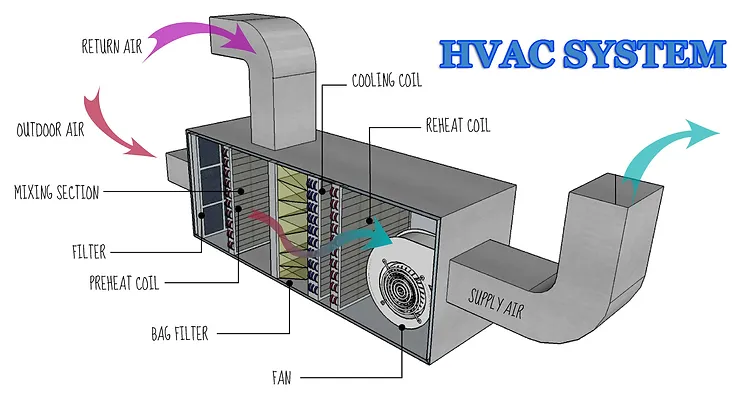
HVAC stands for heating, ventilation, and air conditioning. It is used to regulate the temperature of the home and improve the quality of the air. A well-designed HVAC system will offer these benefits while preventing a significant increase in your utility bills.


Tips for Choosing a Contractor


Follow these tips to ensure that you’re choosing a reputable HVAC service provider.


1. Ensure That You’re Working with a Trained Air Conditioning Expert


One of the most important things to look for is expertise. HVAC systems are often complex, comprising a number of parts, such as the heat pump, air conditioner, and more.


It takes a knowledgeable HVAC technician to be able to properly install and maintain them. The first thing you need to check for is a license. Your HVAC contractor must be legally allowed to work on your air conditioning systems.


You’ll also need to look for experience. Check past projects to ensure that the HVAC contractors have a good track record and have the capacity, experience, and expertise to take on your project.


2. Check for Affordability


You should not have to pay a fortune for an AC unit installation, so make sure you’re requesting an estimate to learn more about the price you will be expected to pay for the company’s services. As with anything, sometimes the least expensive option is not the best option as price sometimes dictates quality. When comparing estimates, be sure to compare the full service and HVAC equipment being installed and not just the price.


3. Compile a List of Candidates


Never choose the first team of HVAC contractors you come across. Make sure you’re assessing a few HVAC technicians prior to making your choice. You can search the internet or request recommendations from friends and family members.


Once you have your list, you can get started checking which ones meet your criteria and can best meet your needs.


4. Ensure That You’re Working with a Professional


There’s nothing worse than hiring a team of HVAC contractors only to find that they are unprofessional, sloppy, or not what you expected. Be sure to talk to the team before hiring them to ensure that they are a good fit for you and can adequately meet your needs.


6 Ways to Improve the Efficiency of Your HVAC System in 20166 Ways to Improve the Efficiency of Your HVAC System in 2016

HVAC efficiency improvements

2016 is well underway! Whether you’ve kept up with your health, fitness and financial goals from the beginning of the year or not, make sure you take steps to care of your HVAC system! Take a look at some HVAC changes that are sure to improve the comfort and efficiency of your home!

Schedule annual maintenance.
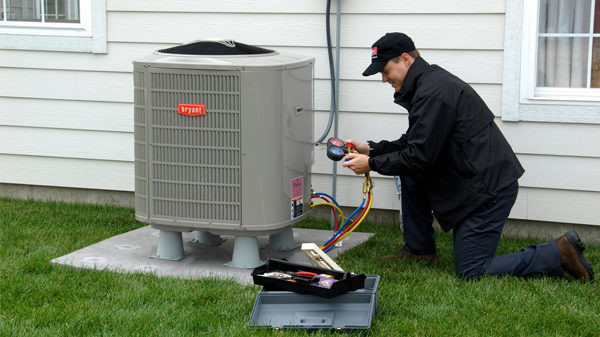
HVAC systems require regular maintenance to improve their performance and efficiency. So remember to schedule your AC tune-up in the spring and furnace tune-up in the fall to help avoid performance problems and breakdowns over the course of the year.

Change your air filter regularly.
Regularly changing your air filter is the most important maintenance task you can perform to improve air quality, prevent breakdowns, and enhance the efficiency of your HVAC system. Remember to check and/or change your filter every month— if it looks dirty and clogged, it’s time to be replaced.

Use your programmable thermostat.
If you aren’t making the most of your programmable thermostat, then make it a priority this year. Programmable thermostats lessen the demand for heating and cooling, easing the load on your HVAC system. You can save up to 15% a year on your heating bill by turning back your programmable thermostat 10° to 15° for 8 hours a day.

Have your ductwork inspected?

Heating, Ventilation & Air Conditioning in Albany, NY | Family Danz
Everyday living habits generate dust, dander and other air pollutants that are pulled into the HVAC system and re-circulated into our indoor air. So if you haven’t done so in the past 5 years, then schedule a professional air-duct inspection with your HVAC technician to remove the debris your vacuum cleaner hose can’t reach.

Get a home energy audit.
A home energy audit is a great way to find out how much energy you’re using as well as the efficiency of your home’s HVAC system. Your Comfort Advisor will evaluate how well your HVAC equipment heats and cools your home and recommend any changes needed in your attic insulation or ventilation.

Consider system upgrades.
Replacing your old HVAC System is a big investment, but it’s also the biggest step you can take to improve your home’s comfort, air quality, and energy efficiency. You can use this handy Energy Star checklist detailing tell-tale signs that it is time to replace your system with an Energy Star-approved system.

GET ANSWERS TO THE 10 MOST COMMON HVAC PROBLEMSGET ANSWERS TO THE 10 MOST COMMON HVAC PROBLEMS

While some HVAC issues are simply a matter of cleaning coils and filters, many of the 10 most common heating and cooling system problems will develop into much bigger concerns if not serviced early. Most of these can be avoided with regular preventive maintenance calls. It is wise to have your system checked annually to prevent outages during extreme weather.
The 5 Most Common Commercial HVAC Problems

1) LACK OF MAINTENANCE
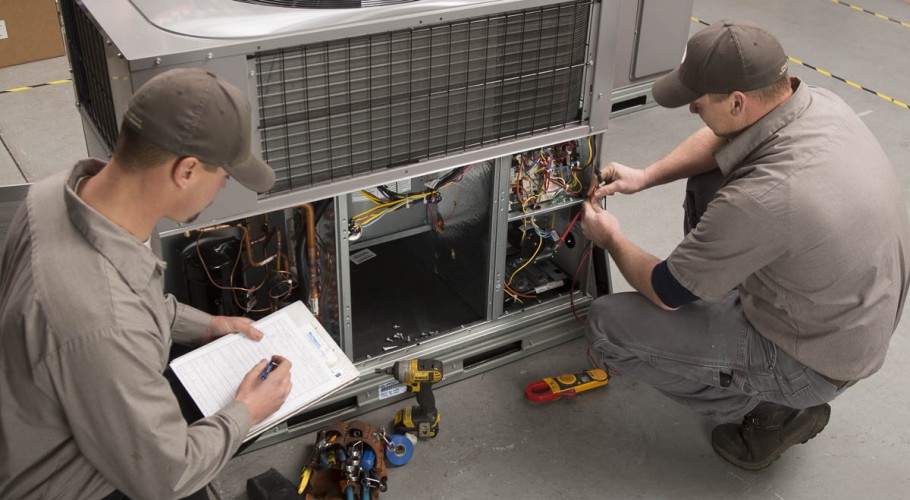
Regularly scheduled maintenance by a licensed service contractor is a MUST to keep your system in proper working order. Many of the most common furnace problems can be avoided with proper maintenance by a certified service contractor. You have likely invested thousands of dollars in your home heating system. Why not protect that investment? If you neglect to perform regular maintenance you will most likely experience unexpected costly breakdowns, increased energy cost, poor performance and frustration.

Protect your investment and gain peace of mind by calling Jennings Heating at (330)355-3135 to have a NATE certified technician inspect your HVAC system today.

2) DIRTY FILTERS

How often should I change my filters? - PAC Plumbing, Heating, Air  Conditioning
Replacing your filter regularly is one of the most important things you can do to extend the life and efficiency of your furnace. If your filter is dirty it will restrict airflow causing your unit to work much harder to circulate air through your home. This puts unnecessary strain on your furnace’s’ blower and will result in comfort issues as well. A dirty filter can also cause the furnace to overheat and shut off on high limit.

3) PILOT OR IGNITION PROBLEMS
Ignition problems can result from a number of causes. A dirty pilot, flame sensor, or burners can cause a pilot outage, short cycling, furnace lockout, or delayed ignition of the burners. It could also be a result of a gas supply problem or just wear and tear of an ignition component that needs replaced like the hot surface ignitor or thermocouple. Either way, it is best to have these problems handled by a trained service technician since this deals with dangerous elements like natural gas and high voltage.

4) THERMOSTAT MALFUNCTIONS
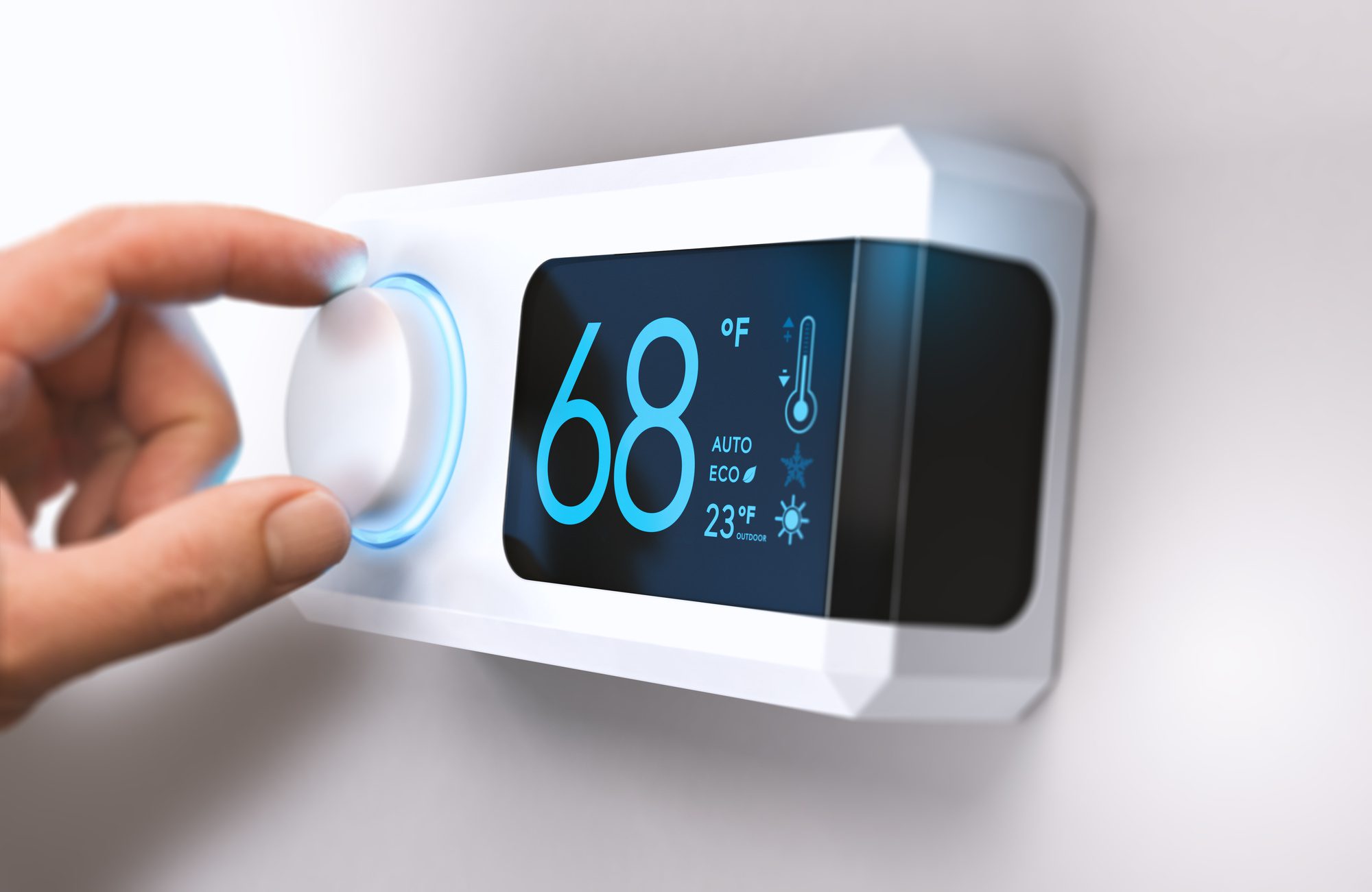
7 Crucial Thermostat Issues That Can Lead to HVAC Problems
There are many different thermostats, both programmable and non-programmable. Frequently, when a homeowner believes their furnace is not operating properly, it is an issue with the thermostat or how it is set. Referring to your owner’s manual and reviewing the operating instructions may prevent you from paying for a costly or unnecessary service call. Programmable thermostats may have batteries which need replaced periodically. If still malfunctioning, problems can be quickly diagnosed by a service technician.

5) MECHANICAL WEAR AND TEAR
There are a number of mechanical components your heating system relies on. Your units performance can be negatively impacted by normal wear and tear of these components. These include belts and bearings, which may result in overheating, poor heating, or airflow issues. Regular maintenance should include checking for worn or stretched belts and oiling bearings and motors if necessary.

6) UNUSUAL FURNACE NOISES
Some furnace noises are part of normal operation, while others may be a warning or indication of a mechanical problem. A whining or squealing motor can be an indication that the bearings in an inducer motor or blower motor are failing. Replacement of the motor may be required to avoid a furnace failure. Other noises may be caused by airflow issues or dirty burners. Either way, it is best not to ignore these signs as they may be a warning of a dangerous operating condition or could lead to a furnace failure.

7) BLOWN FUSES OR TRIPPED BREAKERS
The most common reason the furnace trips a circuit breaker is that the blower is overworking. If something is blocking airflow to your system, your blower has to work harder to compensate. The most common cause is a dirty air filter. When the air filter is dirty your blower has to work harder to force air through the filter. This increases the blower’s energy consumption and can sometimes trip the circuit breaker. Check your filter and replace it with a clean one before resetting your circuit breaker. If the problem recurs, it is best to contact a professional who can safely determine if the issue is caused by a furnace problem or if the circuit breaker itself may have malfunctioned. Other issues that can make the blower overwork include duct leaks, closed or blocked-off air registers or dirty coils.

8) DIRTY CONDENSER OR EVAPORATOR COILS
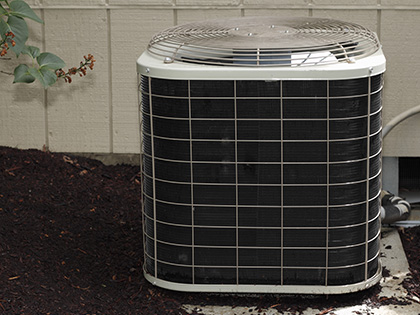
Chances are, regular maintenance on your air conditioner has been neglected it isn’t cooling as well at it could be. Dirt and debris can clog the coils of your system, significantly reduce the efficiency and wear it out sooner. You can hose off the outdoor coil after shutting off the power to the condenser. Power can be shut off at the electrical disconnect near the condenser or at the electric panel. The indoor evaporator coil can become dirty, especially if the furnace filters is not changed frequently. A dirty evaporator coil can reduce the efficiency of both your furnace and air conditioner and make your system work harder. Extremely dirty coils will need to be cleaned by a trained service technician.

9) BLOWER RUNS CONTINUOUSLY
There are a few reasons a furnace blower may run continuously. Before calling for service, check the fan switch on the thermostat. The motor will run continuously when the thermostat is set to the fan on position. It often happens that homeowners accidentally switch the fan switch to on.

There is a fan relay in the furnace that turns the blower on when there is a call for heat; if the relay sticks, the blower will not shut off. There are several types of safeties and limits on the furnace. If activated, the circuit board may bring on the furnace to cool it down. If the limit or safety does not reset, the blower will not shut off. A trained service technician can evaluate this problem and offer repair options.

10) WATER LEAKS
Both air conditioners and high efficiency furnaces produce condensate. Drain pipes are employed to ensure proper water drainage. Furnaces can leak water if the drain lines are either clogged or cracked. A homeowner can help keep the drain lines clean by pouring bleach down the drain periodically. Other possible leak sources could be the collector box, heat exchanger or evaporator drain pan. A service technician should be contacted to determine the source of the water leak and repair options.

For more information on any of these common problems or any other HVAC questions you may have, contact the experts .