Ottos HVAC Blog Five Steps for Providing Great Service to Your HVAC Customers

Five Steps for Providing Great Service to Your HVAC Customers

You already know that your team has the expertise to solve your customers’ air-conditioning and heating issues quickly and affordably, so how do you stand out from your HVAC competitors? The best way is to deliver an easy, friendly, professional experience so that customers want to call your company again and tell their friends and colleagues about you.

1. Create a Lasting Impression

Make a great first impression! Have a professional website that describes who you are and what your customers should expect from you. What are your company’s values? Do you offer a 24-hour service or guarantee all requests for same-day service? Tell your potential customers this and give them clear ways to reach you. Make your phone number easy to find or provide webchat services that allow a customer to reach out in whatever way they feel comfortable.

2. Schedule Service Requests Quickly and Efficiently

When customers contact your company, make sure they’re greeted by friendly voices who are prepared to schedule their service needs. Make sure your phone staff can provide the important information your customer needs so that they can make an informed decision to do business with you. If you use a call center or live answering service, outfit them with the tools to help your customers and make sure they can interface with your customer management database. This way your call center can have access to past service information, quote prices and then schedule jobs. Your callers want reassurance their service needs are being scheduled during the first call and if your customer has to wait around for someone to get back to them, they may find another provider during the wait.

3. Treat Customers with Respect and Compassion

Make sure your technicians delivering service to your customers are friendly, professional and respectful of your customers’ homes and businesses! Your customer is unlikely to call you back to fix a problem if their last impression was of your service technician leaving dirty footprints on the carpet or cigarette butts in the yard. Your technicians are providing a valuable service to people in need, but those customers have a lot of choices. Set an expectation that your service technicians treat your customers with gratitude and the utmost professionalism. This will help your customer remember you and make them feel comfortable inviting your team members into their homes again in the future.

4. Be Honest and Transparent with Customers

Deliver on your promises! Arrive on time. Provide accurate quotes that don’t hide charges. If anything threatens your ability to arrive at a predetermined time with a customer, be proactive and let them know so that they can determine whether they want to continue to wait. If the scope of work changes after a quote is provided, inform your customer immediately. Transparency with customers allows them to make informed decisions about how to move forward. Customers are happiest with providers who are honest and open with them.

5. Follow up to Measure Customer Satisfaction

Check in on your customers! After the service is complete, find a way to check in to make sure the customer’s issues are resolved and that they are satisfied with your service. If you want that customer to come back or to tell their neighbor to call you, you have to show them you care about them. Checking in is a great way to do that. There are many customer management tools on the market that can help automate these check-ins. Research some and find one that works best for your business.

These five simple considerations really can make a difference between gaining a customer for life or just being another service provider in a crowded market. Remember to make a great impression. Once your customer decides to reach out to you, make them happy they did, and be easy to do business with by having great people answer your phones. Guarantee that the technicians you’re sending in to your customers’ homes are professional and show your customers that they’re happy to be there. Deliver on your promises and be transparent when anything gets in the way of you meeting the expectations you set with your customer. Finally, check in on them after the service to make sure they got everything they need from you.

Remember that there are many tools to help you with all these items, including web design teams, great call centers and customer management tools. Be aware of what’s in your marketplace to help you stand out from your competitors. Almost all of them are inexpensive compared to lost customers and opportunities due to poor customer service.

Related Post

6 Must-Know Tips to Prevent Costly HVAC Repairs6 Must-Know Tips to Prevent Costly HVAC Repairs

Replacing AC filter.

With details on why HVAC preventative maintenance is essential and how it can affect your household, let us look at the six crucial steps you need to take regularly to ensure the proper functioning of your air conditioner.

1. Clean the Condenser or Heat Pump

Outdoor air conditioners and heat pumps can get notably dirty, causing the system to work harder to create the necessary cold and warm air you want in your home.

Cleaning the condenser and heat pump reduces the likelihood of damage to any internal components. You should ensure that there is no debris on the top and sides of your outdoor air-conditioning pumps and units.

Use your garden hose on the fins, making sure that you get in between the crevices to get all the gunk out.

Also, double-check that your unit is level. If lopsided, the refrigerants that are so important in helping your AC work well, will be disjointed. Your condenser and compressor could be at an increased risk of breaking down as a result.

2. Check the Filter

One of the most apparent reasons for air conditioner repair is a dirty air filter. Changing the filter is one of the more straightforward ways of doing HVAC maintenance to improve the air conditioner’s efficiency, reduce energy costs of heating the home, and decrease the likelihood of needing repairs.

Check your filter monthly to ensure it isn’t dirty or clogged. If it is, it’s a good idea to give it a good wash and run air over it. As for changing the filter, about once every three months should suffice. If it looks dirtier than usual, then replace it at once, especially if you have pets.

The AC filter can freeze if it is too dirty and then thaw, causing water damage.

If you have a reusable filter, clean it gently with a soft cloth. After that, add some mild soap and water.

If it’s not reusable, head to the store and buy a new one. If you or your family have allergies, it’s good to get a HEPA or hypoallergenic filter. These filters will help the most purify the air.

3. Regular or Annual Professional Check-Ups

A check-up comprises an on-site visit from an HVAC technician who will examine the HVAC system and ensure it operates at optimum performance. Depending on the technician involved, the inspection may include doing any of the following:

  • Ensuring the fan is working correctly
  • Cleaning the coils
  • Checking (or possibly changing) the air filter
  • Cleaning drain lines
  • Checking the refrigerant level
  • Checking for leaks in the heat exchanger

A check-up can be a one-time event or provided yearly as part of regularly scheduled maintenance.

A professional check-up only needs to be completed once a year and aids households to ensure that their HVAC does not break down when they need it most during the peak summer and winter months.

Getting your HVAC serviced means that all the components will be cleaned and inspected, and working at their optimal best, preventing costly energy bills, not to mention expensive, unexpected repair bills.

4. Clean the Drain Lines

An air conditioner, along with cooling, also takes out the moisture from the air. This moisture then accumulates within the drain lines of the air conditioner and is directed outside. Over time, with the accumulation of dirt and dust, the drain lines can become clogged and even be a home for algae and mold.

It is thus a good idea to periodically clean the drain line. Take off the air conditioner’s outer cover and clean the drain line with a clean piece of cloth. Moreover, you can rinse it with a mixture of water and vinegar, removing any mold which might have formed.

5. Keeping the Outdoor Unit Clear

The outdoor unit is continuously exposed to weather and other environmental factors such as dirt and debris. Furthermore, growth and vegetation can cover the outdoor unit over time and prevent the exhaust air from being ejected effectively. Sometimes, the branches and leaves can even get inside the outdoor unit and interfere with the fan’s smooth functioning.

It makes sense to monitor the area around the outdoor unit, and observe any bushes or leaves that might need trimming. This is a DIY job, which does not take up a lot of time, but can save you significant expenses later on.

6. Get a Smart AC Controller or a Smart Thermostat

By making your HVAC system smart, you can access additional features that can help with preventive maintenance. For instance, smart thermostats or smart AC controllers allow you to monitor your usage history and receive alerts every time your AC may need a filter status cleaning.

Keep It Running: 7 Essential Types of HVAC MaintenanceKeep It Running: 7 Essential Types of HVAC Maintenance

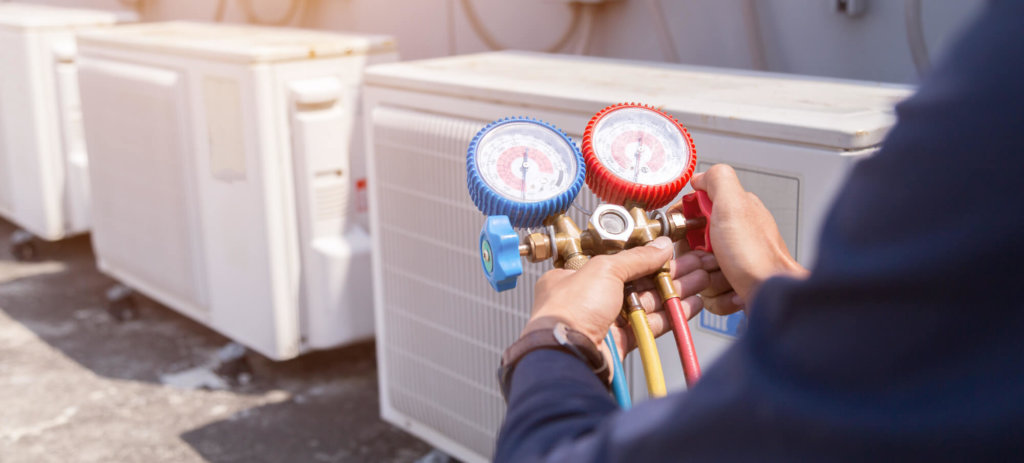
Technician is checking air conditioner ,measuring equipment for filling air conditioners.

As unfortunate as HVAC repairs are, the good news is many can be prevented or delayed with the right maintenance. Learn more here.

A new furnace can cost you anywhere from $2,000 to $7,000 on average, depending on the size of your house. A new central air conditioner, meanwhile, can cost between $2,500 and $15,000.

There will come a time when you need to replace both. But you can delay those replacements with proper maintenance on your HVAC system.

When you maintain your home’s HVAC system, you can steer clear of costly repairs. You assure you get as much life out of your HVAC system as possible before needing HVAC replacement.

Here are 7 essential kinds of HVAC maintenance:

1)  Replace Air Filter Regularly

The air filter inside your HVAC system is arguably its most important component. It protects your HVAC system by shielding it from:

  • Dirt
  • Dust
  • Allergens
  • Pet dander
  • Smoke & smog

Use a high-quality air filter and set a reminder to replace it every three months so your HVAC system runs efficiently. This reduces the risk of it breaking down ahead of schedule.

It’s one of the most essential types of HVAC maintenance.

2)  Clear Area by Furnace and AC Unit

Most furnaces are located in utility closets or basements. So it’s common for clutter to grow around them.

Don’t let too much stuff linger outside your furnace. It makes it hard for you to access your furnace and gathers dust, which can work its way into your furnace. Keep the area clear of clutter at all costs.

From the AC unit outside, clear away:

  • Dirt
  • Leaves & sticks
  • Grass clippings
  • Toys
  • Other debris

Nothing should be atop or against your AC unit.

Assure your AC unit is level. It also should sit on a concrete pad to prevent it from sinking into the lawn.

3)  Clean Evaporator and Condenser Coils

You have evaporator coils inside your HVAC system and condenser coils outside in your AC unit. Both play an important part in keeping your home cool in the heat.

  • Evaporator coils take the warm air inside your home and strip it of humidity so it can be efficiently cooled.
  • Condenser coils push hot air out of your home out so the indoor temperature is comfortable.

Both evaporator and condenser coils must be kept clean to let your HVAC system do its job. Both can get clogged with dirt and debris.

4)  Remove Blower Dirt, Dust, and Debris

Your HVAC system creates as much warm or cool air as you want, depending on the season. But if its blower doesn’t work, that “conditioned” air never makes it through your home.

Your HVAC blower sends warm or cool air  through the ductwork and air register. To work properly, clean it every month or so to get rid of dirt, dust, allergens and debris.

Test the blower to assure it does more than just make noise when your HVAC system runs.

5)  Don’t Let Condensate Drain Clog

The condensate drain in your HVAC system plays an important role. It takes the moisture your evaporator coils remove from the air and drains it away it.

Over time, mold, algae, allergens and more can clog your condensate drain. There’s simply no way for the moisture to drain away. This increases the humidity in your home and potentially causes serious HVAC problems.

Pour a mixture of bleach and water down the condensate drain each year to clear the drain. This should prevent clogs from forming in the first place.

6)  Check and Clean Air Ducts as Needed

When did you last inspect and clean ed the air ducts in your home?

If it’s been a while, a lot of dust and allergens has built up inside them. In some cases, even mold and mildew can grow in air ducts and send mold spores throughout your home.

The National Air Duct Cleaners Association recommends you clean air ducts about once every 3 to 5 years. Besides removing dust, such cleaning also reduces strain on your HVAC system.

7)  Open Air Registers and Keep Them Clear

Opening more of your home’s air registers also reduces HVAC strain.

Make sure at least 80 percent of your air registers are always open. Clear the areas around them to assure uninterrupted air flow.

This lets the warm or cool air spread throughout your home. You’ll notice a big difference when you open more air registers.

Make HVAC Maintenance a Priority

Regular maintenance extends the life of your HVAC system and reduces your energy costs.

But there will be times when you’ll need an HVAC professional. We provide the residential, commercial and industrial HVAC services you need to keep your HVAC system going strong.

10 SIGNS IT’S TIME TO REPLACE YOUR HVAC SYSTEM10 SIGNS IT’S TIME TO REPLACE YOUR HVAC SYSTEM

Clock on red background

Many homeowners across Hampton Roads wrestle with deciding the right time to replace their heating and cooling systems. Here are 10 indicators that point to the fact that your HVAC system is ready for an overhaul. In most cases, you will find investing in a new, energy-efficient system, will save you money in the end. With a new heating and cooling system, you should not have unexpected repair bills nor increased utility costs. If you find yourself checking yes to these ten items, then it’s time for a new HVAC system.

1. HEATING & COOLING SYSTEM UNIT IS 10 YEARS + OLD

If your heating and cooling system is older than ten years of age, then chances are, it utilizes freon (or R-22) coolant. Owing to its harm to the environment, the manufacturing of R-22 has been retired across the globe. There are options to convert the coolant chemical to a safer agent. However, you should weigh the costs of this repair in addition to others on the horizon of an aging system. If your HVAC system is 10 years or older, you may be saying, “it’s time.”

2. BLOWING WARM AIR OR NOT BLOWING COOL AIR

When the temperatures warm up from Virginia Beach to Williamsburg homeowners will be clicking on their air conditioners. Your heating and cooling system has one purpose in life – to keep your home comfortable. Cool in the hot summer months and warm in the cold winter months. If you run your air conditioner and find that warm air or no cool air is blowing out, then you know you have a problem. Your HVAC system may have an issue with the compressor. Another reason could be an issue with refrigerant. Refrigerant may be leaking or low. Depending on the age of your HVAC system, the refrigerant cost may be more expensive than investing in a new cost-efficient system especially if your system uses the now-retired R-22 coolant.

3. POOR OR WEAK AIRFLOW

If you turn your system’s air conditioner on for the first time this spring and notice that the airflow from the AC return vents is barely pushing out cool air, then your system may have a problem. The issue could be as small as a clogged air filter (air filters require regular replacements). Lack of airflow could be an indicator of a broken motor, blower fan, or an even more serious problem. The bottom line, if your HVAC is not performing at its optimum level then greater energy bills are on their way. A cooling system running harder than it should to meet average output will be more taxing on the unit (on a track for greater repair bills) and will cost more in overexerted utility bills.

Woman on couch sweating

4. LOUD OR UNUSUAL NOISES

It is normal for a heating and cooling unit to make low-level sounds as it starts up and shuts down. However, if you are hearing uncommon noises – loud bangs and thuds, grinding, grating, and whistling – then your HVAC system is not well. If your system makes a buzzing or rattling sound, your heating and cooling system may have a loose part. No matter how you describe the noise, if it is uncommon to your system – then it requires attention. Call in a Smith & Keene expert technician to give your system an evaluation to determine the extent of the repair required.

5. HUMIDITY IN THE HOME

An air conditioning system should be equipped to keep moisture levels under control. If you notice that the inside of your home is just as humid as the weather outdoors, then your system needs a recalibration. HVAC systems should naturally be pulling humidity out of your home. If they are not doing this job, then other issues could be on the horizon.

6. FOUL ODORS

If you notice foul smells coming from your HVAC system not only is it annoying, it could be an indicator of a greater problem with your unit. Musty smells from your air conditioner vents could be an indicator of mold or mildew growing in the ventilation ductwork. A professional duct-cleaning could remove the microbial causing the odor. Worse odors, such as burning metal or melting plastic, are signs of a serious HVAC malfunction. These smells could indicate burned-out wire installation or motor. Turn your AC unit off immediately and call for a professional to evaluate the extent of repair required.

7. LEAKS

While minor condensation around your cooling system is expected, heavy drainage or leaks are signals of an issue with your HVAC. A drainage tube is the element of your HVAC that draws condensation away from your cooling system and outside of your home. If the condensation drain is clogged, then your system’s condensation drip pan may overflow causing water damage to ceilings or walls (depending on the placement of your AC system). Spotting a leak could also indicate that there is an issue with your refrigerant. Refrigerants are the chemicals used to maintain that your system does not overheat. It also keeps the air in your home cool. If the refrigerant is leaking in your system, then your system will not have sufficient coolant, and overheating could occur.

8. FREQUENT OR SHORT CYCLING

It is normal for an HVAC system to flip on or off in keeping your home at a comfortable temperature. However, it is not normal for air conditioners to short-cycle. Short-cycling is when your HVAC turns off before a cycle is completed. While one cause of short-cycling could be that your HVAC is too large for your home, another cause will lead you down the road of repairs. Short cycling is an indicator that your system is running harder than it should because of an issue. Whether it is a simple clogged air filter, or refill on your refrigerant, or it could be that your HVAC compressor is failing. Regardless of the cause, short cycling is a reason to call in a heating and cooling expert.

9. HIGH OR RISING ENERGY BILLS

If your utility bill for your HVAC suddenly spikes and is not in line with the temperatures outside, it could be an indicator that your system is working harder than it should. A heating and cooling system that is overworked means it is not running efficiently. The less efficient your HVAC system, the higher the utility bill. Additionally, if your cooling system is constantly running overtime then more repairs could be in the near future. Take steps to have your system evaluated by a professional to determine the cause of your system running above its means. If your system requires hefty repairs you may be saying “it’s time” to invest in a new, more energy-efficient system to lower utility bills.

Man reading bill

10. FREQUENT REPAIR BILLS

Every family has a tipping point for major repair bills. Whether it is a vehicle, a major appliance, or your heating and cooling system, there comes a time when the cost of a repair outweighs the investment of a replacement. If you are frequently sinking money repairing an aged HVAC unit, then a new more energy-efficient system could be your best bet. If it’s time for a new unit for your home’s HVAC, contact the experts at Smith & Keene to evaluate your out-of-date system and guide you in the most efficient heating and cooling system for your home.

CALL THE EXPERTS

If your home’s HVAC has one or more of these indicators, then chances are a new system is in your future. Be proactive! Don’t wait for mounting repair bills or until your unit completely breaks. Contact us to schedule one of our expert HVAC technicians to evaluate your existing cooling unit. If repairing your system is the right route, our team can handle it. If it’s time to get a new unit, our team is specially trained to guide you in selecting the ideal HVAC unit for your home. Don’t be afraid to say “It’s Time” and invest in a new heating and cooling system for your family.