Ottos HVAC Blog What is an HVAC contractor & what do they do?

What is an HVAC contractor & what do they do?

f you live in a home with indoor heat and air conditioning, you know how important it is to keep the system working properly.

Without HVAC systems operating at peak efficiency, life can become extremely uncomfortable quickly.

That’s why hiring an HVAC contractor when your system begins acting up is so important. HVAC contractors have the training and experience to fix your HVAC system fast.

But what does an HVAC contractor do and what kind of services do they offer? How do you choose an HVAC contractor? Keep reading to find out.

What is an HVAC contractor?

An HVAC contractor is someone who specializes in heating, ventilation, and air conditioning (HVAC) systems. They are professionals who are licensed and insured to install, repair, and maintain HVAC systems in homes and businesses.

HVAC contractors can help homeowners maintain their HVAC systems so they run efficiently and cost-effectively year after year. They can also help homeowners plan for and install new HVAC systems when their current system stops working correctly or no longer meets their needs.

HVAC contractors are also responsible for making sure that all installed systems are properly maintained and operate safely. This includes making sure that all electrical work is up to code, that air ducts are properly sealed and filtered, and that gas lines are properly installed and capped.

What does an HVAC contractor do?

As we’ve said, HVAC contractors install, repair, and maintain HVAC systems. They can also provide HVAC maintenance and replacement services when systems break down and need to be repaired or replaced.

Regardless of the service they provide, the main goal of an HVAC contractor is to keep you and your family comfortable. If your system is running at peak efficiency, you can expect to save on energy costs and have a reduced carbon footprint.

When your HVAC system is not working properly, an HVAC contractor can help you get it back up and running as quickly as possible.

Here’s a look at the three main services that HVAC contractors provide:

1) HVAC maintenance services

Regular HVAC maintenance service can extend the life of your HVAC system, reduce your chances of needing expensive repairs, and save you money on energy bills.

A trained HVAC contractor can inspect your system and identify any issues that need to be addressed. They can also make sure that your system is in proper working order.

While you can perform some maintenance tasks on your own, HVAC contractors have the training and expertise that homeowners don’t have. They can do a more thorough inspection and address issues you may not have even realized existed.

Common HVAC maintenance services include:

  • Cleaning or replacing air filters. Air filters should be cleaned or replaced every month or as needed. Dirty filters can cause your HVAC system to work harder, resulting in higher energy bills. When filters are old, they can also pose a health risk to your family.
  • Flushing your cooling system. Flushing your cooling system removes dirt, sand, and other debris that accumulates in the pipes of your cooling system. Keeping your cooling system clean reduces your risk of needing maintenance or repairs. It can also help extend the life of your HVAC system.
  • Checking and maintaining electrical components. Electrical components such as circuit breakers and cooling fans are essential to keeping your HVAC system in proper working order. An HVAC contractor can make sure these components are working properly and that your system is protected from electrical issues.

2) HVAC installation services

HVAC contractors also can help install new systems in your home or business. HVAC contractors have the experience needed to plan the best system for your home, install it correctly, and ensure it is operating safely.

An HVAC contractor will work with you to choose a system that meets your needs and fits your budget. They can also help you navigate local building and zoning codes.

3) HVAC repair services

HVAC contractors can also provide repair services for your existing HVAC system.

If your system breaks down and needs to be fixed, you don’t want to wait. The sooner you get your system back up and running, the less discomfort you’ll have to deal with and possibly less money you’ll waste on energy bills.

Some HVAC repairs can be done quickly, while others may take longer. In some cases, it may be more cost-effective to replace your system than to have repairs done.

HVAC contractors can help you decide what is best for your situation. They can also help you navigate any homeowner’s insurance that you may have that could cover the cost of repairs.

4) HVAC replacement services

When your HVAC system breaks down beyond repair, it will need to be replaced. Some HVAC contractors also offer HVAC replacement services.

Before choosing a new system, an HVAC contractor will help you assess your current system and determine what size you need and what type of system would be best for your home.

They can also help you navigate the types of rebates and incentives that may be available to you when making your decision.

Some HVAC contractors may even provide financing for HVAC replacements so you can spread out the cost over time.

How to choose an HVAC contractor

The best place to start your search for an HVAC contractor is through friends and family. Ask them if they’ve had a contractor or company that they’ve had a good experience with in the past.

You can also search for an HVAC contractor online. Checking contractor search sites like Angi’s List or seeing Google’s top recommendations for contractors in your area is a quick way to build a shortlist of candidates.

Remember, not all contractors are created equal. Choose an HVAC contractor who has experience in your area and is knowledgeable about your type of HVAC system.

Before choosing an HVAC contractor, make sure they are licensed and insured if required by your state, city, or local area. You can typically check to see if contractors are licensed and insured in your area by visiting the website of your state’s government.

When you are interviewing contractors, make sure you ask the following questions:

  • How long have you been in business? A contractor who has been in business for many years is more likely to be experienced and knowledgeable than someone who has just started out.
  • Do you specialize in HVAC systems? An HVAC contractor who specializes in your type of system can help you make the best decision for your home.
  • Do you have experience installing the type of system I’m considering? An HVAC contractor with experience installing your system can help you make sure it’s installed correctly. A contractor with these attributes can help you choose the best system for your home, install it properly, and maintain it for years to come.

Choosing an HVAC contractor may seem like a daunting task, but it doesn’t have to be. Be sure to check out online reviews and talk to friends and family to narrow down your search.

Next, give the contractor or company a call to get an idea of their experience, pricing, and their projected timeline for getting the work done. You may even be able to get a free consultation or estimate.

Once you feel comfortable with a contractor, move forward with the project and give your HVAC system the love it deserves!
Related Post

ASK THESE 7 QUESTIONS BEFORE HIRING AN HVAC CONTRACTORASK THESE 7 QUESTIONS BEFORE HIRING AN HVAC CONTRACTOR

Ask These 7 Questions Before Hiring an HVAC Contractor

It’s no secret that a properly functioning HVAC system is crucial to the comfort of your home. But when it comes time to hire an HVAC contractor, how can you be sure you’re getting someone who will do the job right? Here are some important questions to ask before hiring an HVAC contractor in Annapolis, MD:

ARE YOU LICENSED AND INSURED?

When hiring an HVAC contractor, you want to be sure the company is properly licensed and insured. This protects you in case something goes wrong during the job. Be sure to ask for proof of both before moving forward.

When you ask about licenses and insurance, inquire about other credentials the contractor may have. This can include things like industry certifications or training. The more credentials a contractor has, the better.

WHAT’S YOUR EXPERIENCE?

You’ll want to hire a contractor with plenty of experience. Ask about the contractor’s history, how long the company has been in business and the types of projects the company typically works on. The more experience contractors have, the better equipped they will be to handle your project.

With these, you can also ask about references. Good contractors should be able to provide you with a list of past clients who can vouch for their work. This way, you can get first-hand accounts of what it’s like to work with them.

WHAT’S YOUR POLICY ON OVERTIME CHARGES?

Some contractors will charge you extra for overtime, and others won’t. It’s important to know the policy before hiring a contractor because this can be a significant cost if you’re not careful.

You need to understand how contractors charge for overtime. If they charge by the hour, you need to know their hourly rate. If they charge a flat fee, you’ll want to know how much that fee is.

CAN YOU PROVIDE A WRITTEN ESTIMATE?

When hiring a contractor, you’ll want to get a written project cost estimate. This way, there are no surprises down the road. The estimate should contain a list to show exactly what you’re paying for.

Be sure to ask about any other documents the contractor will need, such as a contract or proposal. These can give you additional information about the project and help you make an informed decision.

WHAT’S YOUR WARRANTY POLICY?

Most contractors will offer some warranty on their work. This protects you in case something goes wrong once the job is complete. Be sure to ask about the warranty terms, such as how long it lasts and what it covers.

You should also inquire about any other guarantees the contractor offers. For example, some contractors may guarantee their work for a certain period. Others may offer a money-back guarantee if you’re unsatisfied with the results.

This will help you understand what type of protection you have if something goes wrong. It is also safe practice to save all paperwork related to the warranty in case you need to use it later.

WHAT ARE YOUR PAYMENT TERMS?

HVAC contractors will typically require some payment upfront. This is usually a deposit that goes toward the project’s total cost. Be sure to ask about the payment terms before hiring a contractor.

You’ll also want to know when the final payment is due. Some contractors will require full payment upon completion of the job, while others will give you a grace period to make the payment. It’s important to know this so you can budget accordingly.

WHAT’S YOUR CANCELLATION POLICY?

Sometimes, you may need to cancel your project after hiring a contractor. Knowing the contractor’s cancellation policy is important so you don’t lose your deposit.

Some contractors will allow you to cancel without penalty if you give them enough notice. Others will charge a cancellation fee, which could be a percentage of the total project cost. Be sure to ask about this before hiring a contractor.

Health Benefits of having an HVAC systemHealth Benefits of having an HVAC system

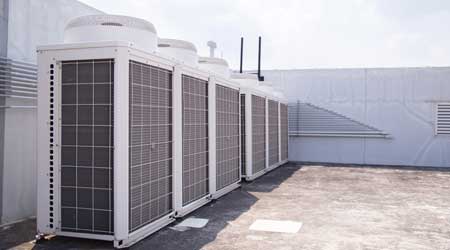
Exterior HVAC fans in an Atlanta backyard

There are certain obvious benefits of having a HVAC system that most people know of e.g. regulating your indoor temperature. But did you know that there are more benefits of HVAC systems than simply regulating your indoor temperature? That’s right.

Your HVAC system can also offer some health benefits to you. Contaminants such as fungi, dust and bacteria could seriously affect your health when inhaled indoors. The solution? A HVAC system can help prevent this and other issues. Want to learn the health benefits of having an HVAC system? Let’s dive into it.

WHAT ARE THE BENEFITS OF HVAC SYSTEMS?

The HVAC health benefits you ought to know of include:

  1. They help improve indoor air quality. According to the EPA, the quality of indoor air is 2-5 times worse than the air outside. This is mainly because the airflow indoors tend to be more congested than outside air. The contaminated air in your home can cause health problems such as allergies and cold. Having a HVAC system installed at home or office can improve the quality of air you breathe while indoors. A HVAC system does this by continuously exchanging your indoor air with fresh, filtered outdoor air.
  2. They help conserve energy. While the initial investment of acquiring a HVAC system may seem high, you’ll be able to notice some energy-saving benefits every month. Since a HVAC system contains both cooling and heating in one unit, it saves on installation time, space, fees and usage of power. A HVAC system can also be run by renewable energy sources such as solar panels. Also, since a HVAC system’s coolant is non-chlorine based, energy conservation is boosted.
  3. They help regulate moisture indoors. Having the right amount of indoor moisture is beneficial to both your building’s structure and your health. If the moisture is too much, it can cause growth of mold and mildew in your home. Also, if the moisture is too little, it can cause discomfort and heat loss. A HVAC system ensures your indoor moisture is well regulated and consistent. It does this by pulling air that’s warm and moist outside – and sending dry, cool air indoors.
  4. They help you sleep well. A HVAC system that’s well maintained and efficient will ensure you sleep well at night. Sleeping well is vital for your overall health. Since a HVAC system regulates the indoor temperatures and ensures quality flow of air, expect to sleep well with one installed in your home.

5 reasons why HVAC systems visibility needed5 reasons why HVAC systems visibility needed

5 reasons why HVAC systems visibility needed

Commercial buildings account for more than 35 percent of the total energy consumption. In most of those structures, heating, ventilation and air conditioning systems consume more than 30 percent of the total energy use.

Building owners and facility managers are challenged with getting financial returns from their investments while providing a building that is energy efficient.

As HVAC systems have become complex, non-linear and dynamic, facility managers are increasingly using building management systems to collect data about the performance of the building, as well as energy consumption by individual equipment such as HVAC systems.

Below, SenseWare offers five ways visibility into such data can help drive maximum HVAC efficiency:

1. Comfort of indoor environment 

The importance of an HVAC system in commercial and residential buildings cannot be overemphasized.

The fact remains that fresh air is good for the body, and in commercial buildings, it helps improve productivity. A good ventilation system helps to reduce the number of pollutants, bacteria and odor in a facility.

Data analytics of HVAC systems helps in regulating the temperature of a building and lowering humidity by ensuring that moisture in a building is kept under control. Good ventilation systems remove breeding grounds for dust mites, which contribute to causing eczema.

The American Society of Heating, Refrigeration and Air Conditioning

Engineers (ASHRAE) conducted research that led to Standard 55: Thermal

Environmental Conditions for Human Occupancy. Standard 55 describes how

to assess comfort from specific measurements and predict when most people

will be comfortable.

Data analytics of the HVAC system provides real-time data that helps in maintaining this standard and in preventing any setbacks.

How to Plan HVAC Systems for Long-Term Performance - Facilities Management  Insights

2. Energy efficiency

Operating a HVAC system at optimum efficiency is a challenging endeavor. The number of set points, levels and feedbacks of boilers, chillers, pumps, fans, air delivery components and more can cause costly inefficiencies. Add to that the fact that weather variables affect the heat transfers in a building and increase loads on the HVAC.

Data analytics will provide visibility into your HVAC system with sufficient accuracy that will help you take corrective action and reduce the energy demands and peak load distribution of your HVAC systems.

Facilities Net states that HVAC system maintenance in commercial buildings is responsible for saving more than 40 percent of energy, therefore it is essential to utilize data analytics in understanding the effects of malfunctioning HVAC systems on energy use, energy consumption and energy demand.

3. Improve indoor air quality

According to the Environmental Protection Agency (EPA), poor indoor air quality is among the top factors of environmental risk. Pollutants in the air can aggravate allergies and asthma in some people and cause dizziness and headaches in others.

Air quality depends on various factors like people entering the facility, use of other equipment and presence of electronics. With the proliferation of cheap sensors, air quality data is now being accurately measured.

This visibility into the data can help adjust your HVAC system to improve the air quality. You can develop a maintenance plan that includes:

  • Inspection, serving, and cleaning
  • Replacement of parts
  • Documentation of procedures
  • Calibration of components control system

4. Preventive maintenance

HVAC systems often operate at suboptimal levels at least 40 percent of the time in buildings. This is due to the complexity of the buildings, as well as many moving parts like fans, pumps, air-conditioners, ventilators and dampeners.

Data analytics uncovers the following problems of your HVAC system:

  • Additional runtime
  • Poor control settings and programming errors
  • Stuck dampers causing excess outside air intake
  • Valve leakage leading to uncontrolled supply-air temperatures
  • Outright equipment failure

5. Actionable insights

Data analytics provide essential insights to help with monitoring, controlling and maintaining your HVAC systems. In the absence of this type of information, facility managers physically perform manual audits that are inefficient and time-consuming.

With the advent of IoT, more sensors are being used in buildings for various equipment. The data analytics out of this ocean of data can help determine the best course of action to take to maximize HVAC efficiency.

You can also analyze the information in various ways to better understand the opportunities it presents. For example, you can look at the normalized data for your building type, square footage, schedule and climate.

You can break down the data to better understand energy consumption based on building occupancy and time, thereby identifying peak demand reduction opportunities.

Heating, ventilation, and air conditioning - Wikipedia